Commercial Care for Resident-Centered Facilities
Senior Living Carpet Cleaning in Hammond
Need Carpet Cleaning Planned Around Senior Living Operations for a Hammond-area property? Tell us about the areas you need cleaned and the best time to reach you. Call us or fill out the form, and we will contact you to discuss the job and provide a quote.
Serving Hammond and Northwest Indiana homes, apartments, condos, and workplaces.
Get a quote
Get a commercial cleaning quote in Hammond
Choose a service and your city, then send your contact information. We will contact you to discuss the job and provide a quote.
Quote request received
Quick details
Tell us about your business
Tell us the property type, rooms, floors, and busiest areas.
Share your open hours and when the cleaning can be completed.
Tell us about loading, keys, elevators, parking, and security rules.
Map Resident, Staff, Dining, and Service Routes
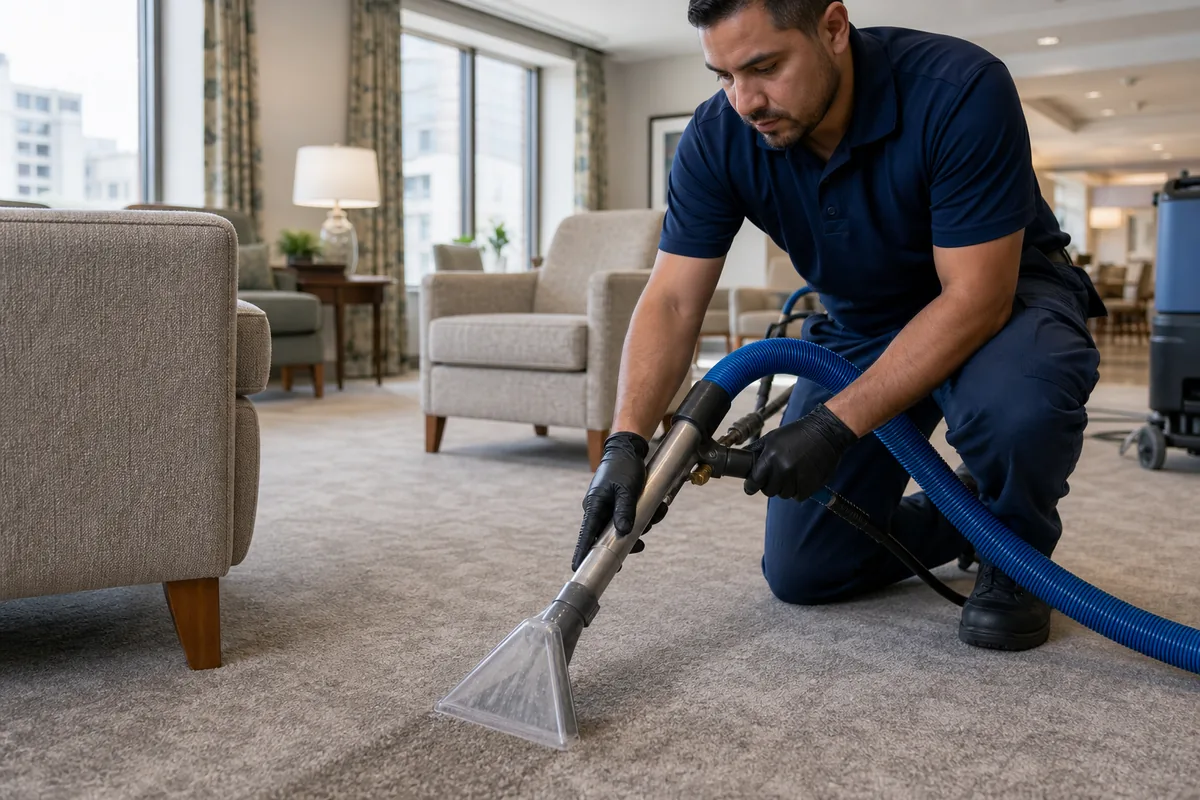
The walkthrough identifies lobbies, corridors, lounges, dining rooms, activity areas, offices, elevators, and carpet near service zones. We note turning points for carts and mobility devices, furniture density, recurring spills, worn seams, and spaces subject to separate facility procedures. The map distinguishes appearance cleaning from clinical, resident-care, food-service, or environmental work managed by the operator. It also establishes which route must remain open during each phase. Comparing high-use areas with protected carpet helps separate removable soil from abrasion or pile distortion. A precise room list prevents one generic method from being assumed across different carpet and upholstery materials.
Coordinate With Daily Routines and Facility Leadership
Meals, activities, visits, medication rounds, housekeeping, deliveries, and quiet periods all affect timing. The facility identifies an authorized contact, restricted areas, resident communication needs, keys, alarms, elevators, and routes that cannot close. Work may be divided into smaller zones so residents and staff have a planned alternative path. Furniture movement responsibilities are agreed upon beforehand, especially for heavy seating or equipment. A schedule should include drying and reset rather than ending when equipment leaves. The cleaning team follows the facility's operational directions, while the operator retains responsibility for resident care, accessibility decisions, exposure protocols, and reopening each area.
Get a quote for your property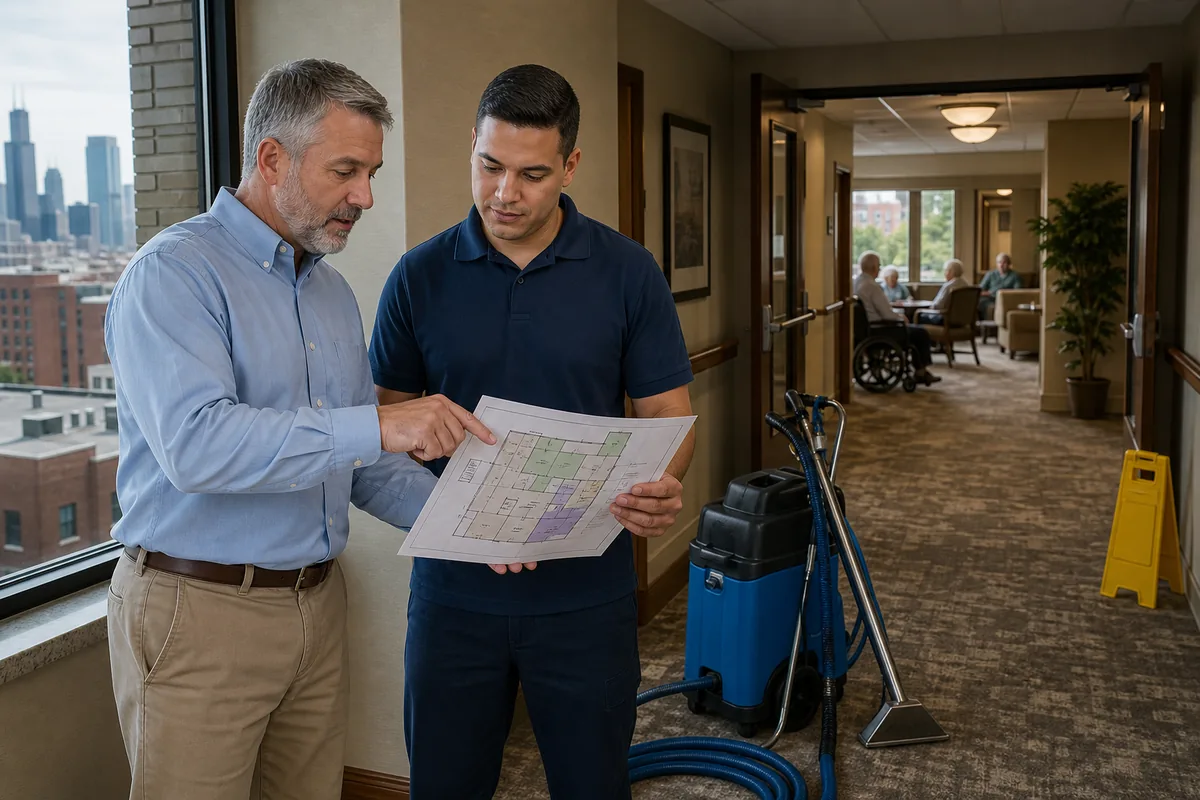
Treat Dining and Lounge Spots Individually
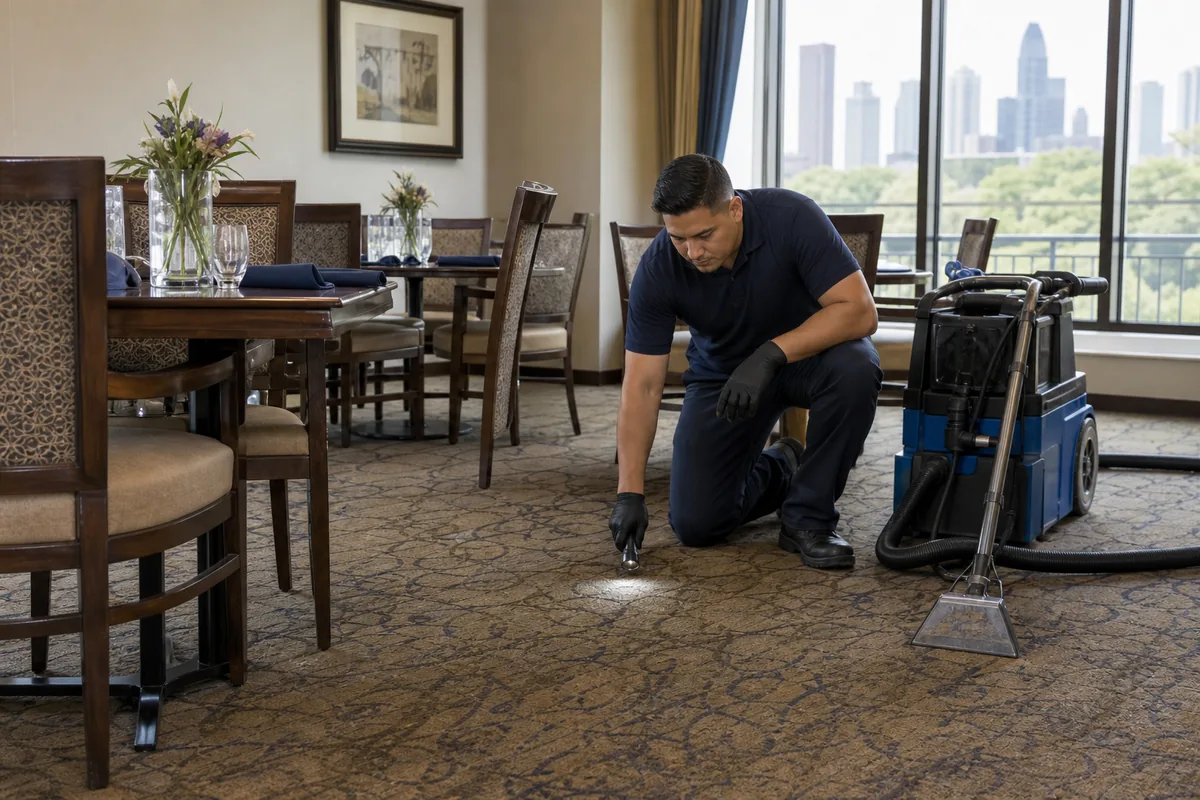
Coffee, tea, food oils, sauces, medication-related spills, and unknown older marks should not receive one universal spot product. Facility staff may provide useful history about what occurred and what was already applied. We test treatment choices and consider surrounding carpet so a worked spot does not become an uneven patch. Some discoloration remains because dye, fiber, backing, or earlier chemistry has changed. Upholstered lounge seating requires its own material inspection rather than automatically sharing the carpet process. Cleaning addresses accessible soil; it does not substitute for food-service procedures, regulated cleanup, pest management, or replacement of absorbent materials affected below reach.
Protect Traffic Flow During Cleaning and Drying
Equipment, hoses, damp carpet, and moved furniture must be incorporated into an approved route plan. The facility determines alternate corridors, elevator use, and how residents or visitors are redirected. Signage supports communication but does not replace staff oversight or building-specific procedures. Carpet is cleaned in sections that can be completed and reviewed without creating conflicting paths. Drying varies with ventilation, humidity, carpet construction, and treatment intensity, so fixed release times should not be promised. Furniture and rolling items return only under the facility's reset process after the area reaches the condition its authorized contact accepts.
Use Records to Guide Maintenance and Repairs
After each phase dries, the facility can review remaining wear, damaged transitions, loose seams, recurring spots, and areas blocked by furniture or policy. Consistent photographs and room notes create a practical baseline for later scheduling. Entry zones or dining paths may need different maintenance from quiet administrative rooms. Routine vacuuming, mat care, and prompt spot reporting can reduce accumulation between deeper services. The record also directs flooring repairs and water-source investigation to the appropriate trade. It describes the appearance work completed without certifying health outcomes, accessibility, regulatory compliance, or a guarantee that future incidents will not recur.
Planning around your facility
Commercial cleaning questions
A facility-approved zone plan can preserve designated routes when layout and operations support it. Staff coordination and area-release decisions remain essential.
They often need individual identification and treatment. Food-service procedures and any regulated cleanup remain separate from ordinary carpet appearance cleaning.
It can be included separately after fabric, care-code, construction, condition, access, and drying needs are inspected. Carpet and upholstery do not automatically share one method.
Use actual traffic, entry exposure, dining use, spot records, carpet condition, manufacturer guidance, and facility requirements rather than a universal frequency.
Request commercial cleaning
Tell us about your property and schedule.
Call us or fill out the form. We will contact you to discuss the areas you need cleaned and provide a quote.
Get My Quote