Identification Before Spot Treatment
Carpet and Upholstery Stain Removal in Hammond
Looking for carpet and upholstery stain removal in hammond in Hammond or Northwest Indiana? Tell us what you need cleaned. Call us or fill out the form, and we will contact you to discuss the job and provide a quote.
Serving Hammond and Northwest Indiana homes, apartments, condos, and workplaces.

Get a quote
Get a carpet and upholstery cleaning quote in Hammond
Choose a service and your city, then send your contact information. We will contact you to discuss the job and provide a quote.
Quote request received
Quick details
What to tell us
Tell us which rooms, furniture, rugs, or floors need service.
Point out spots, odors, heavy traffic, pet concerns, or past cleaning products.
Share your Northwest Indiana city, ZIP code, stairs, parking, and entry details.

Record What Spilled and What Happened Next
Useful details include the likely substance, when it occurred, whether heat was involved, how far it spread, and every product or technique already applied. Photos taken near the time of the incident can help, although lighting changes color. Blotting, rubbing, rinsing, powders, rented machines, and mixed household products may alter both the stain and surrounding fiber. We inspect the mark's edge, texture, odor, location, and relation to backing or seams. When the source is unknown, testing proceeds cautiously. A good history narrows choices and reduces the risk of repeating chemistry that already caused residue, color loss, or distortion.
Identify the Fiber, Dye, and Construction
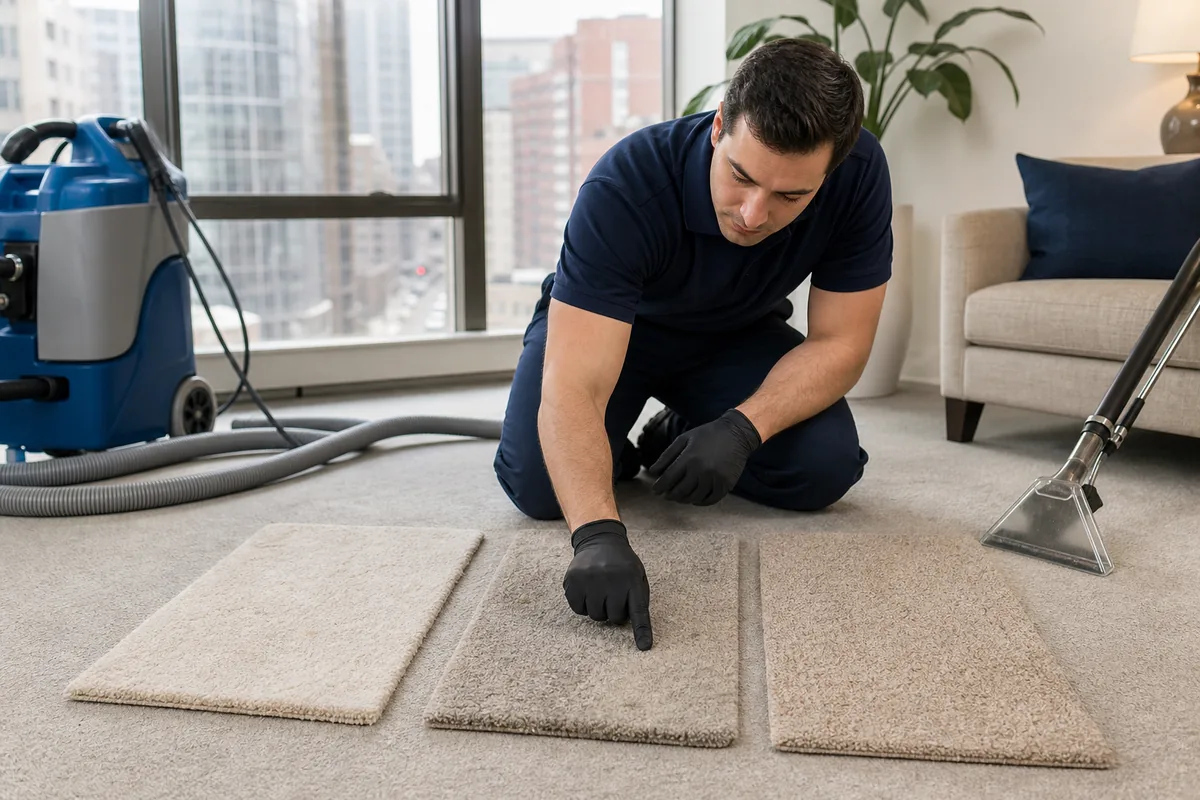
Wool, nylon, polyester, polypropylene, cotton, linen, rayon, microfiber, velvet, leather, and blended upholstery do not share identical stain behavior. Rug foundations, carpet backing, cushion fill, protective finishes, and decorative trim can add further constraints. We review labels and construction, then test for color transfer, texture change, and response where appropriate. A product suitable for one synthetic carpet may be unsuitable for an absorbent natural fabric or finished leather. Material identification does not guarantee removal, but it helps choose a measured process and identify when specialist restoration, repair, recoloring, or replacement deserves consideration.
Get a quote for this service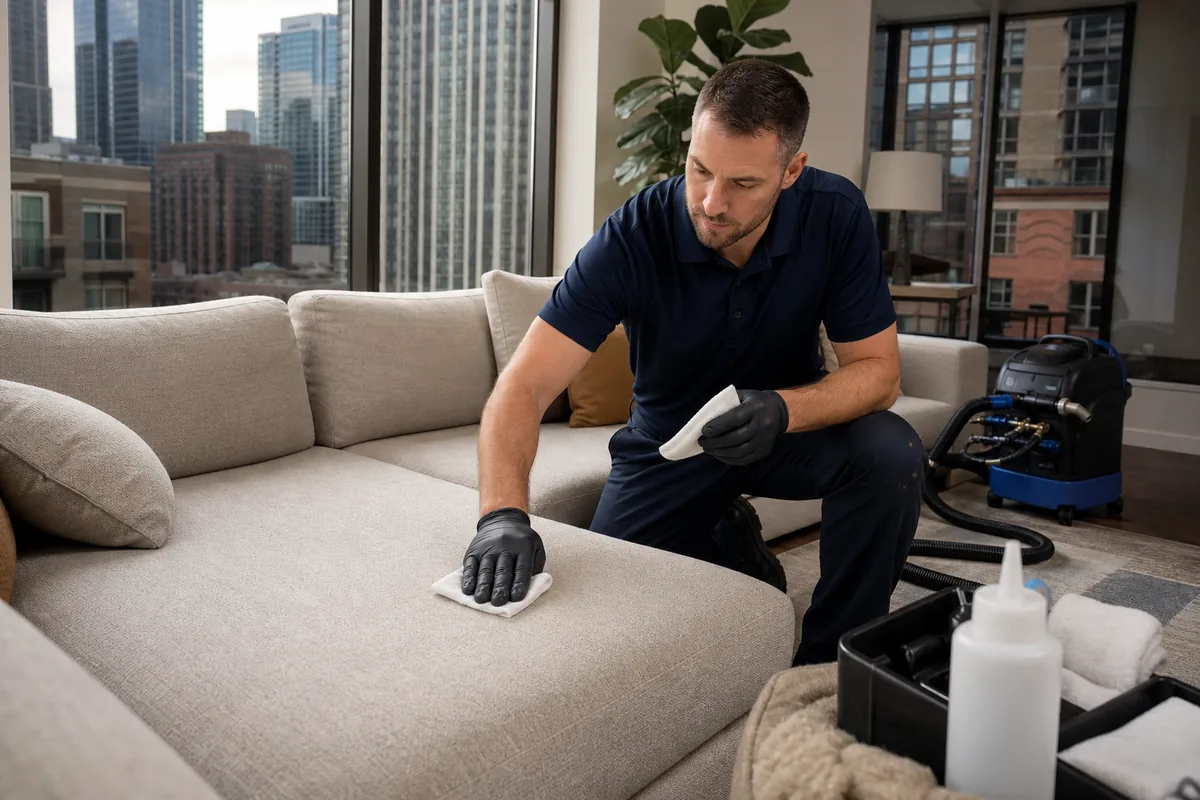
Treat the Spot Without Ignoring the Surrounding Area
Spot work usually proceeds from controlled treatment and removal rather than aggressive scrubbing. The goal is to release recoverable material while limiting spread, pile distortion, rings, and residue. A stain may need several careful stages, and the surrounding panel may require blending so the treated area does not become an isolated clean patch. More product is not always more effective, particularly when backing or cushion material can retain moisture. We monitor what transfers, how the fiber responds, and when further treatment presents more risk than likely benefit. Stopping at the material's limit is part of responsible stain removal.
Distinguish Residue From Permanent Color Change
Sticky residue may attract new soil and cause a spot to reappear visually. Material that traveled into backing can wick toward the surface during drying. In contrast, bleach, strong chemicals, sunlight, heat, abrasion, and some spills can remove dye or alter the fiber itself. Those changes do not rinse away because the original material is no longer present. We explain whether the remaining mark appears to be soil, residue, texture difference, pile direction, dye loss, or damage. Carpet repair, upholstery repair, recoloring, or replacement may be the relevant next step when cleaning has removed what it can.
Observe Drying Before Judging the Result
Damp carpet and fabric can look darker, and pile direction or room lighting can exaggerate a temporary difference. Treated areas should dry with suitable airflow and without furniture, covers, or foot traffic trapping moisture. Drying varies with fiber, backing, cushion, room humidity, ventilation, and treatment depth. Once dry, inspect from several angles under normal light and note whether a mark has changed. If residue moves back toward the face, follow-up may differ from a permanent color change. Immediate over-treatment can increase risk, so the final assessment belongs after the material has stabilized rather than while it is still damp.
Questions before you schedule
Common questions
Some older stains improve, but age, oxidation, prior products, heat, fiber damage, and dye change can limit the result. Inspection and testing are necessary.
Residue can attract soil, or material in backing may move toward the surface during drying. A reappearing spot needs reassessment rather than automatic stronger treatment.
Avoid adding new chemistry when possible. Blot excess material, retain product information, and report everything already used so the condition can be evaluated clearly.
No. Bleaching is color loss rather than removable soil. Recoloring, repair, furniture placement, or replacement may be separate options depending on the material.
Ready for a quote?
Tell us what you need cleaned.
Call us or fill out the form. We will contact you to discuss the job, answer your questions, and provide a quote.
Get My Quote