Commercial Cleaning for Learning Spaces
School Carpet Cleaning in Hammond
Need Carpet Cleaning Planned Around School Operations for a Hammond-area property? Tell us about the areas you need cleaned and the best time to reach you. Call us or fill out the form, and we will contact you to discuss the job and provide a quote.
Serving Hammond and Northwest Indiana homes, apartments, condos, and workplaces.
Get a quote
Get a commercial cleaning quote in Hammond
Choose a service and your city, then send your contact information. We will contact you to discuss the job and provide a quote.
Quote request received
Quick details
Tell us about your business
Tell us the property type, rooms, floors, and busiest areas.
Share your open hours and when the cleaning can be completed.
Tell us about loading, keys, elevators, parking, and security rules.
Build a Room-by-Room work
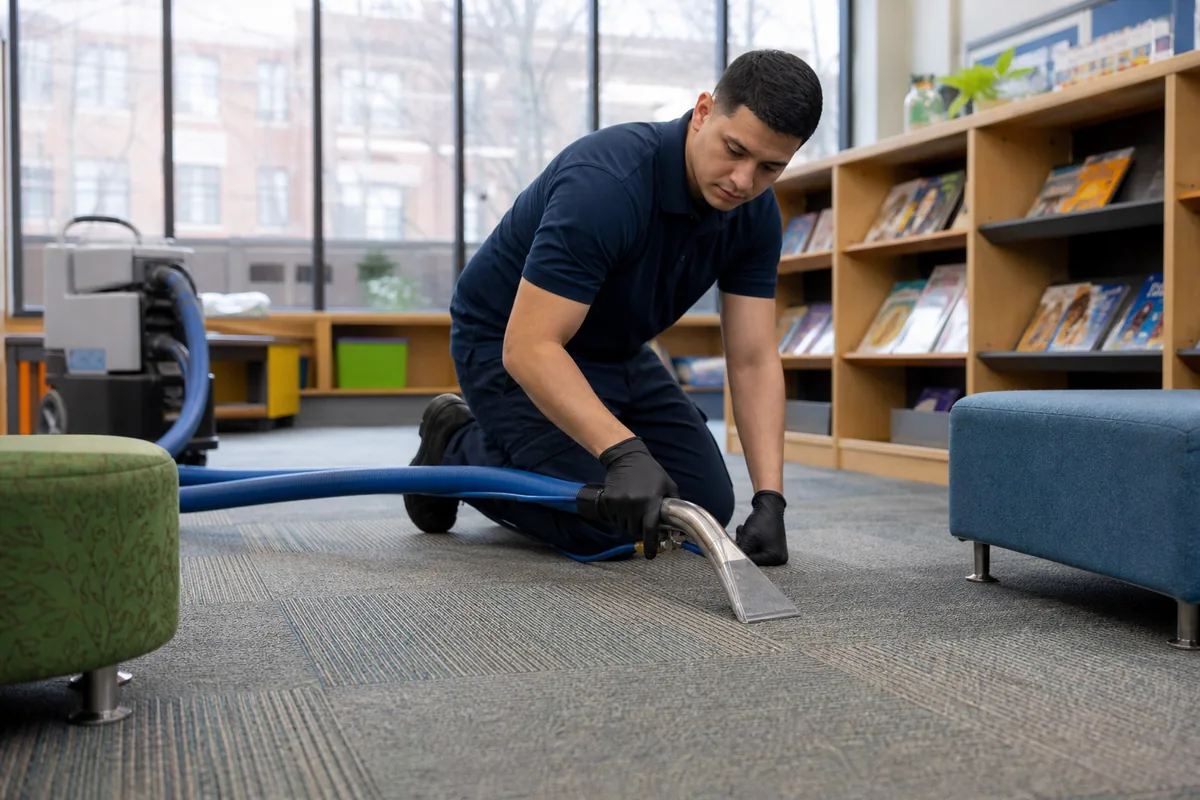
The facility walkthrough identifies carpeted classrooms, reading areas, libraries, offices, stages, stairs, and entries. We record furniture density, damaged seams, floor outlets, transition strips, recurring spots, and routes used by carts or mobility devices. Rooms with different carpet tiles, broadloom, rugs, or upholstered seating are not assumed to use one method. The school designates areas that are restricted or subject to separate procedures. A room list also clarifies which desks and lightweight items will be moved, which fixed furniture stays, and what access remains blocked. This prevents broad square-foot assumptions from replacing an inspection of how each learning space actually functions.
Coordinate Calendars, Projects, and Secured Access
Breaks and summer periods can still contain camps, meal programs, teacher workdays, construction, and floor projects. Carpet cleaning should follow dust-producing work and occur with enough time for observed drying before rooms are reset. The school controls keys, alarms, student records, devices, and restricted materials. One authorized contact should confirm the sequence and handle unexpected room changes. Multi-floor buildings may be phased so crews, furniture reset, and other trades do not cross damp carpet. Loading instructions, elevator use, and hallway routes need advance agreement. The calendar becomes workable when it includes operations and access, not merely a date with no room-level plan.
Get a quote for your property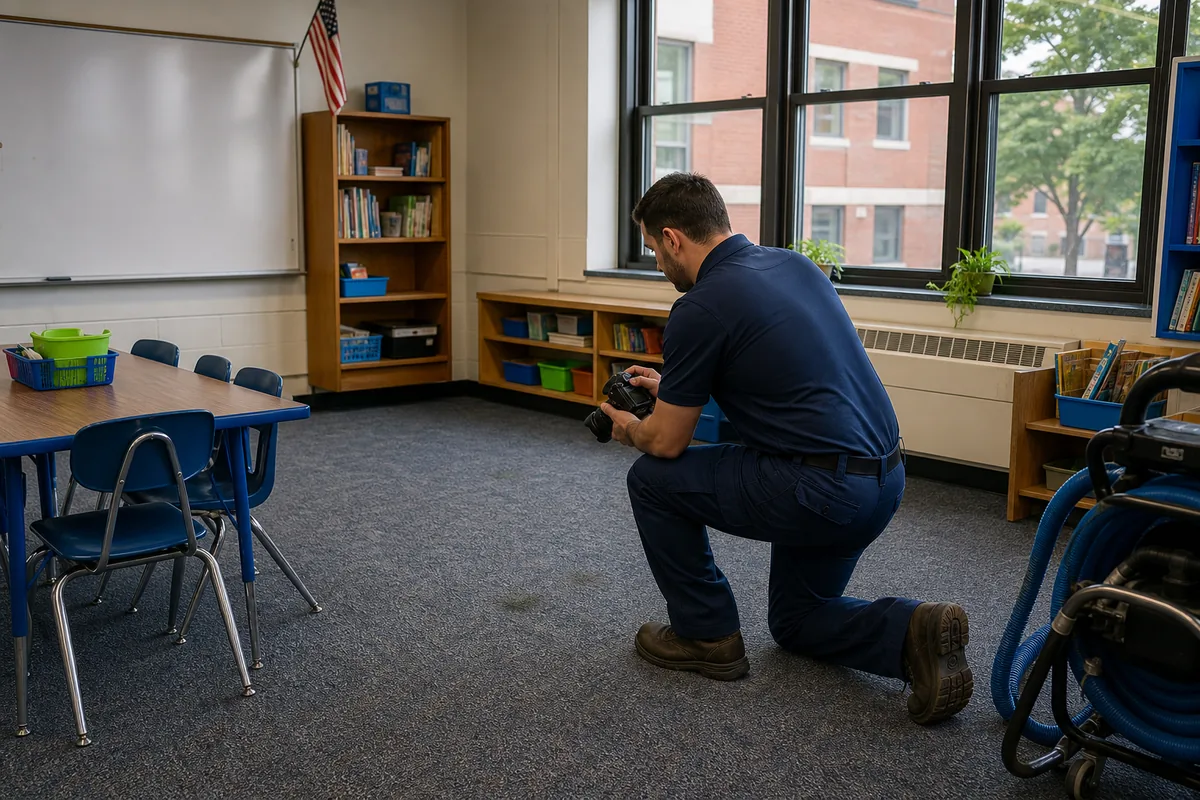
Address Food, Art, and Everyday Classroom Spots
Juice, milk, markers, paint, glue, modeling material, and unknown older spots each require evaluation. Teachers or custodial staff may know what was spilled and what products were already tried. That history is useful because heat, rubbing, and mixed products can change both stain and fabric. We test treatment choices and balance the surrounding area rather than attacking every mark with the same chemistry. Some discoloration remains because dye or fiber has changed. Gum, hardened adhesive, bleach, burns, cuts, and frayed seams may require a separate decision. Cleaning should improve recoverable conditions without promising that a well-used classroom will look unused.
Focus on Entries, Corridors, and Furniture Patterns
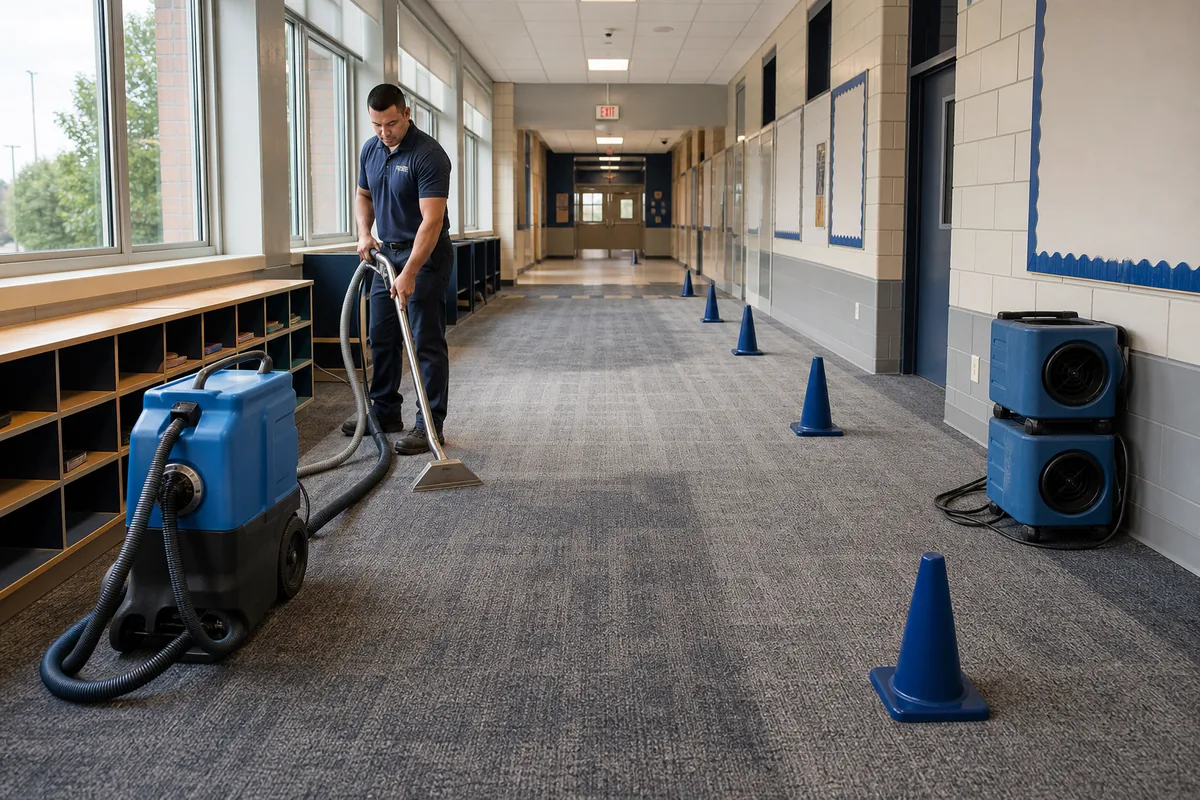
Winter grit, deicer, rain, and mud enter at exterior doors and move along predictable paths. Chair legs, rolling shelves, and classroom layouts create additional wear lanes. Dry soil removal is an important first stage, especially around edges and under accessible furniture. We compare high-use lanes with protected carpet to identify abrasion or flattened pile beneath the soil. Entry matting and routine maintenance can reduce migration, provided mats are correctly placed and maintained. Carpet tiles may allow facilities staff to consider selective replacement when one area is physically damaged. The cleaning record should distinguish spots and soil from components that need repair or replacement.
Verify Drying Before Rooms Are Reset
Carpet may feel dry at the surface before backing or heavily treated areas are ready. Ventilation, humidity, carpet construction, room temperature, and treatment intensity affect the pace. Furniture should not be reset across damp routes or placed in a way that creates transfer marks. Staff should follow the agreed room-release process rather than assuming every zone finishes together. After drying, the facility can review results, remaining damage, and access limitations under normal light. These notes support future condition-based scheduling and warranty records where relevant. They do not certify a room for occupancy or replace the school's own environmental and operational review procedures.
Planning around your facility
Commercial cleaning questions
A phased plan may work when room schedules, secured access, other trades, furniture reset, and drying routes are coordinated with an authorized facility contact.
Some spots improve, while cured material, dye change, earlier products, or fiber damage may remain. Each material requires identification and testing.
The work can address accessible areas around agreed furniture. Dense layouts and fixed items may limit coverage, so movement responsibilities should be documented beforehand.
The service should not be represented as a general sanitization guarantee. The school retains its own product, environmental, and facility procedures.
Request commercial cleaning
Tell us about your property and schedule.
Call us or fill out the form. We will contact you to discuss the areas you need cleaned and provide a quote.
Get My Quote