Commercial Care for Gathering Spaces
Worship Facility Carpet Cleaning in Hammond
Need Carpet Care for Churches and Worship Facilities for a Hammond-area property? Tell us about the areas you need cleaned and the best time to reach you. Call us or fill out the form, and we will contact you to discuss the job and provide a quote.
Serving Hammond and Northwest Indiana homes, apartments, condos, and workplaces.
Get a quote
Get a commercial cleaning quote in Hammond
Choose a service and your city, then send your contact information. We will contact you to discuss the job and provide a quote.
Quote request received
Quick details
Tell us about your business
Tell us the property type, rooms, floors, and busiest areas.
Share your open hours and when the cleaning can be completed.
Tell us about loading, keys, elevators, parking, and security rules.
Divide the Building by Function and Traffic
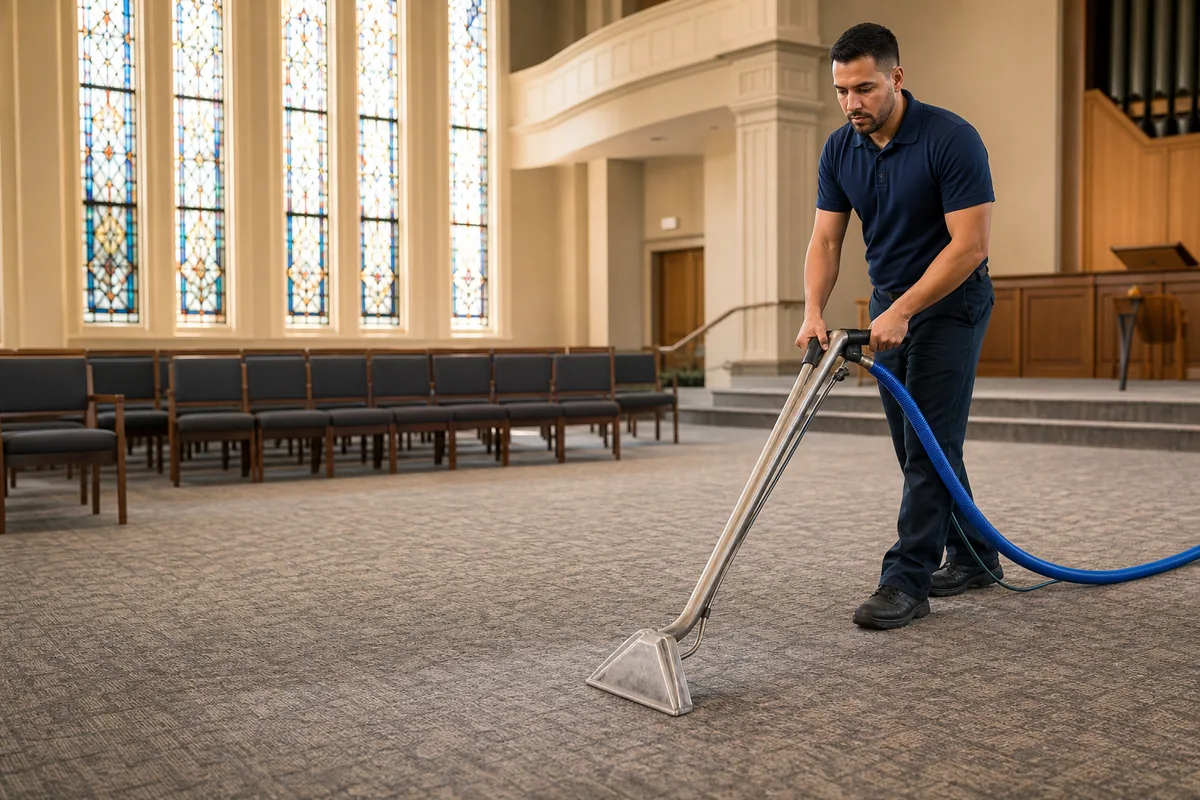
The walkthrough maps the sanctuary, aisles, narthex or lobby, fellowship spaces, classrooms, offices, stairs, and any carpeted stage or choir area. Each zone has different soil, access, furniture, and scheduling needs. Fixed pews create narrow working lanes, while stackable chairs and tables require a movement plan. Entry carpet may hold winter grit and moisture that never reaches interior rooms. We identify protected comparison areas, damaged transitions, recurring spots, and rooms excluded from the work. This zone map allows leaders to prioritize the most visible and heavily used spaces without treating every square foot as though it has identical conditions.
Plan Around Services, Events, and Building Users
The calendar should account for services, weddings, funerals, rehearsals, meal programs, classes, office hours, and outside groups. A large open window is useful only if authorized contacts, keys, alarms, heat or cooling, and drying airflow are also arranged. Work may be phased by floor or room to preserve access elsewhere. The facility should identify doors and paths that must remain clear and ensure members do not enter damp areas unexpectedly. Hammond weather can affect arrival, ventilation, and tracked soil, so the plan needs reasonable flexibility without relying on vague availability promises. One designated contact should approve work changes during the appointment.
Get a quote for your property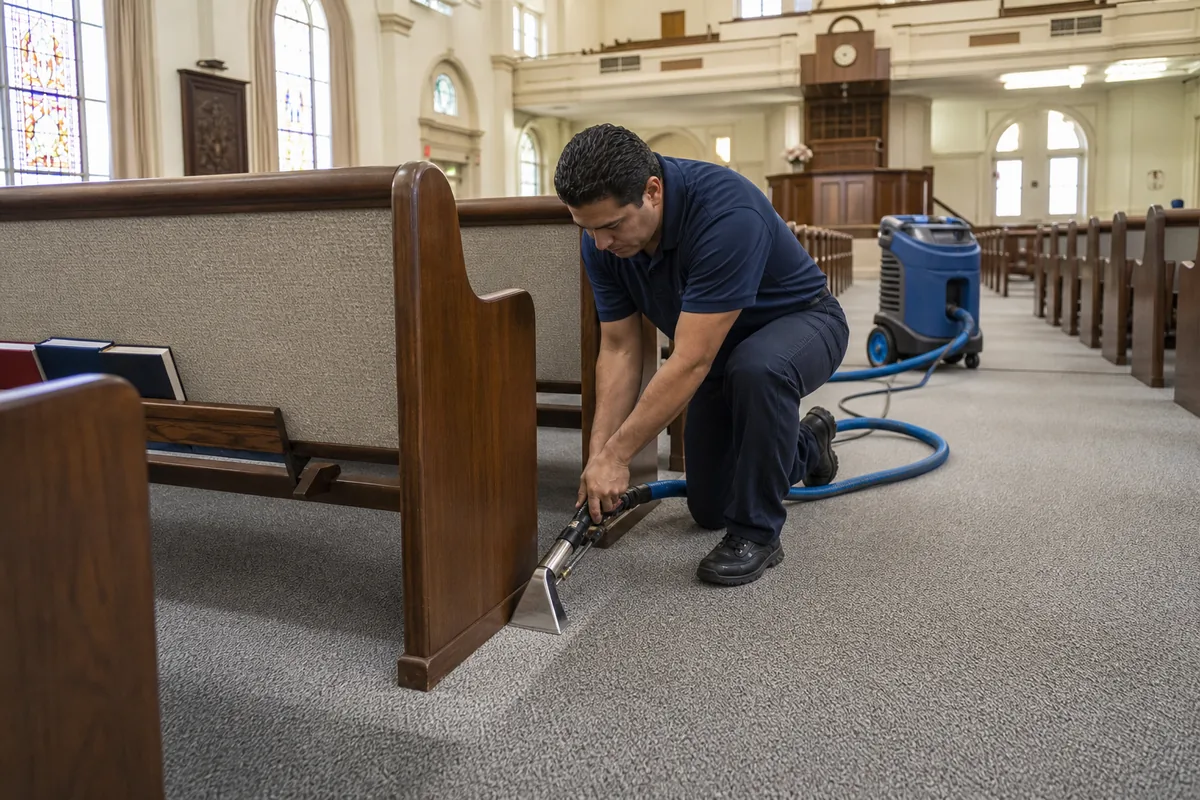
Detail Aisles, Pew Edges, Stairs, and Entries
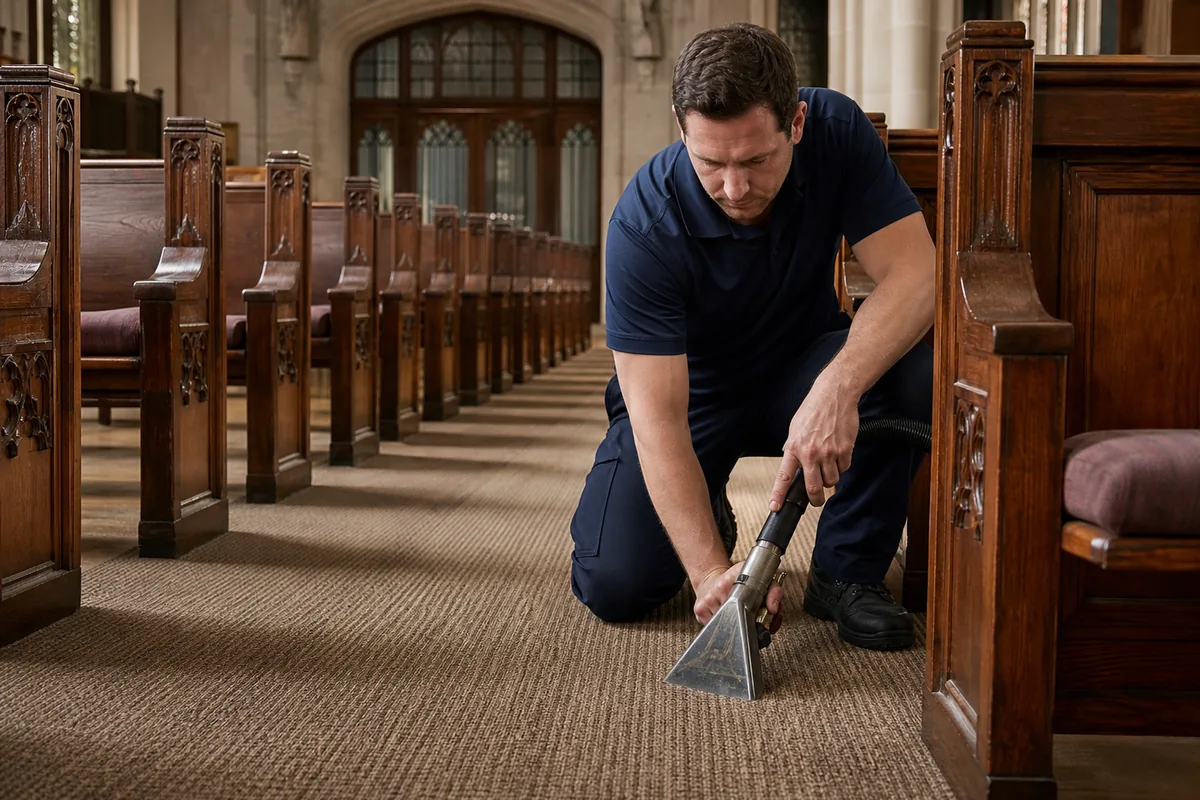
Aisle edges, kneeling areas, stair nosings, and the carpet beside pew ends collect concentrated soil and abrasion. Dry removal comes first, including corners where grit gathers. Cleaning tools and movement are adapted to the accessible width without forcing contact against woodwork, memorial elements, instruments, or decorative trim. Dark lanes can contain both removable soil and permanent pile wear. We explain that difference before treatment. Entry mats and vestibule routines can reduce winter deicer and rain transfer, but they also require consistent upkeep. Careful edge work often matters more in these spaces than broad passes across lightly used open carpet.
Treat Fellowship and Classroom Spots With Context
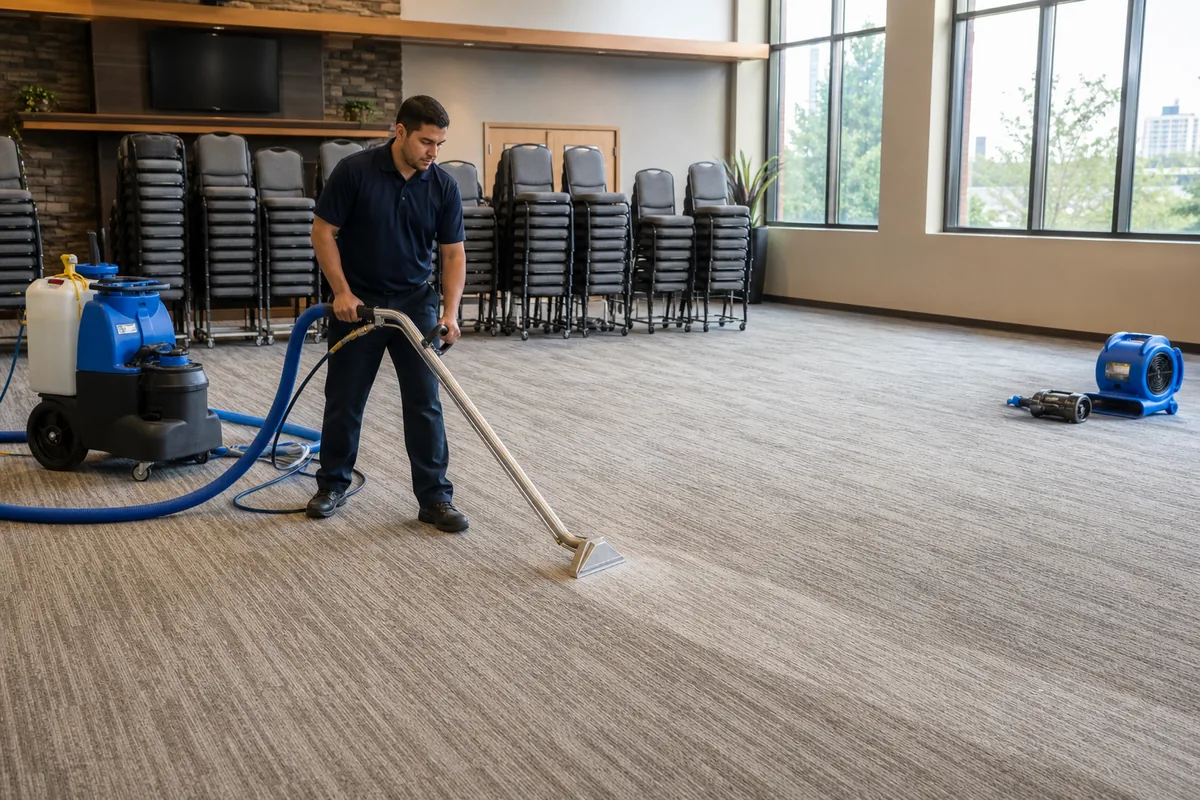
Coffee, juice, food oils, craft materials, wax, and unknown event residue require separate evaluation. Staff knowledge of the spill and earlier cleanup attempts can guide testing, but older spots may have changed the dye or fiber. We avoid applying one strong product across every mark. Furniture is moved only according to the agreed plan, with special attention to folding tables, stacking chairs, and floor transitions. Cleaning may improve many common spots while leaving paint, bleach, burns, hardened adhesive, or permanent discoloration. A simple spot-reporting process for volunteers can preserve useful information and reduce repeated household-product applications between scheduled services.
Review Drying, Access, and Long-Term Condition
Drying depends on carpet construction, indoor humidity, ventilation, room temperature, and treatment intensity. Fixed pews and large rooms can create uneven airflow, so areas should remain closed or clearly routed until ready. After drying, leaders can review the sanctuary and support rooms in normal lighting, noting worn seams, remaining damage, and areas blocked during service. A maintenance plan can then follow actual traffic and event use rather than one universal frequency. Records help future committees understand what was cleaned and what needs flooring repair. They do not constitute a safety, health, accessibility, or code-compliance determination for the building.
Planning around your facility
Commercial cleaning questions
Accessible aisles, edges, and open areas can be planned around fixed seating. Tight gaps, fragile woodwork, or blocked sections may limit tool access and should be documented.
Many improve, but spill type, age, fiber, dye stability, and earlier products affect the result. Paint, bleach, burns, and material damage may remain.
Yes, when room access, drying routes, keys, alarms, and the event calendar are coordinated. Each phase should have a clear authorized contact.
Use traffic, event frequency, entry conditions, spot history, manufacturer guidance, and observed wear to set intervals instead of adopting one generic schedule.
Request commercial cleaning
Tell us about your property and schedule.
Call us or fill out the form. We will contact you to discuss the areas you need cleaned and provide a quote.
Get My Quote