Detail Work for High-Use Transitions
Carpeted Stair and Hallway Cleaning in Hammond
Looking for carpeted stair and hallway cleaning in hammond in Hammond or Northwest Indiana? Tell us what you need cleaned. Call us or fill out the form, and we will contact you to discuss the job and provide a quote.
Serving Hammond and Northwest Indiana homes, apartments, condos, and workplaces.
Get a quote
Get a carpet cleaning quote in Hammond
Choose a service and your city, then send your contact information. We will contact you to discuss the job and provide a quote.
Quote request received
Quick details
What to tell us
Tell us which rooms, furniture, rugs, or floors need service.
Point out spots, odors, heavy traffic, pet concerns, or past cleaning products.
Share your Northwest Indiana city, ZIP code, stairs, parking, and entry details.
Inspect Treads, Risers, Nosings, and Landings
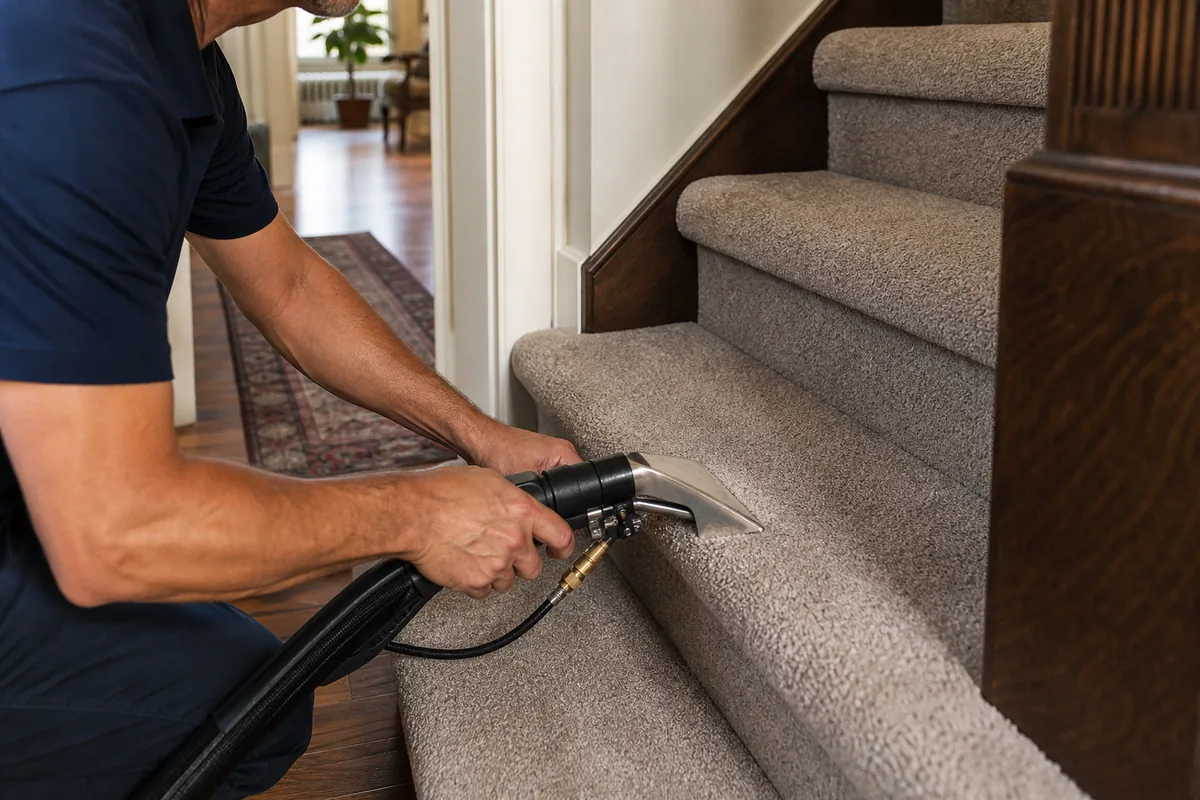
Stair carpet wears differently across each component. The center of a tread may hold foot soil, the nosing may show abrasion, the riser may collect scuffs, and the turn at a landing can flatten pile in several directions. We note loose edges, exposed fasteners, separated seams, fraying, ripples, and transitions before cleaning. Comparing the protected sides with the central path helps distinguish soil from physical wear. Unsafe or unstable installation conditions may need flooring repair before cleaning proceeds. A step-by-step inspection creates a more useful work than treating the staircase as a small version of an open room.
Use Detailed Dry Removal in Narrow Areas
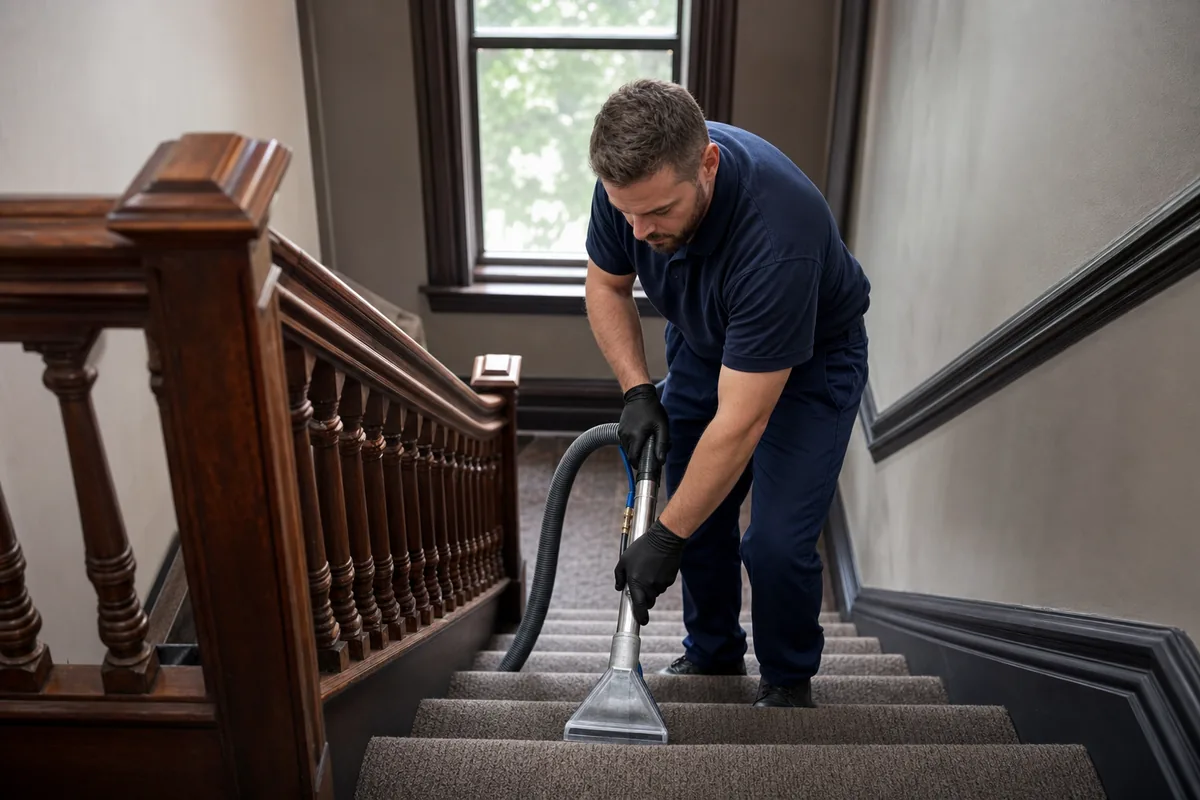
Grit, hair, crumbs, and dust settle along stair corners, wall edges, balusters, and the junction between tread and riser. Appropriate vacuuming and detail tools reduce loose material before wet treatment. Sharp debris should be collected first, and fragile wall finishes or woodwork identified. Dark edge lines may contain fine airborne soil, but paint gaps, old adhesive, filtration pathways, and permanent staining can contribute to the appearance. Cleaning access changes with stair width, railing position, turns, and nearby doors. Deliberate preparation supports even work without forcing full-size room equipment into unsuitable spaces.
Get a quote for this service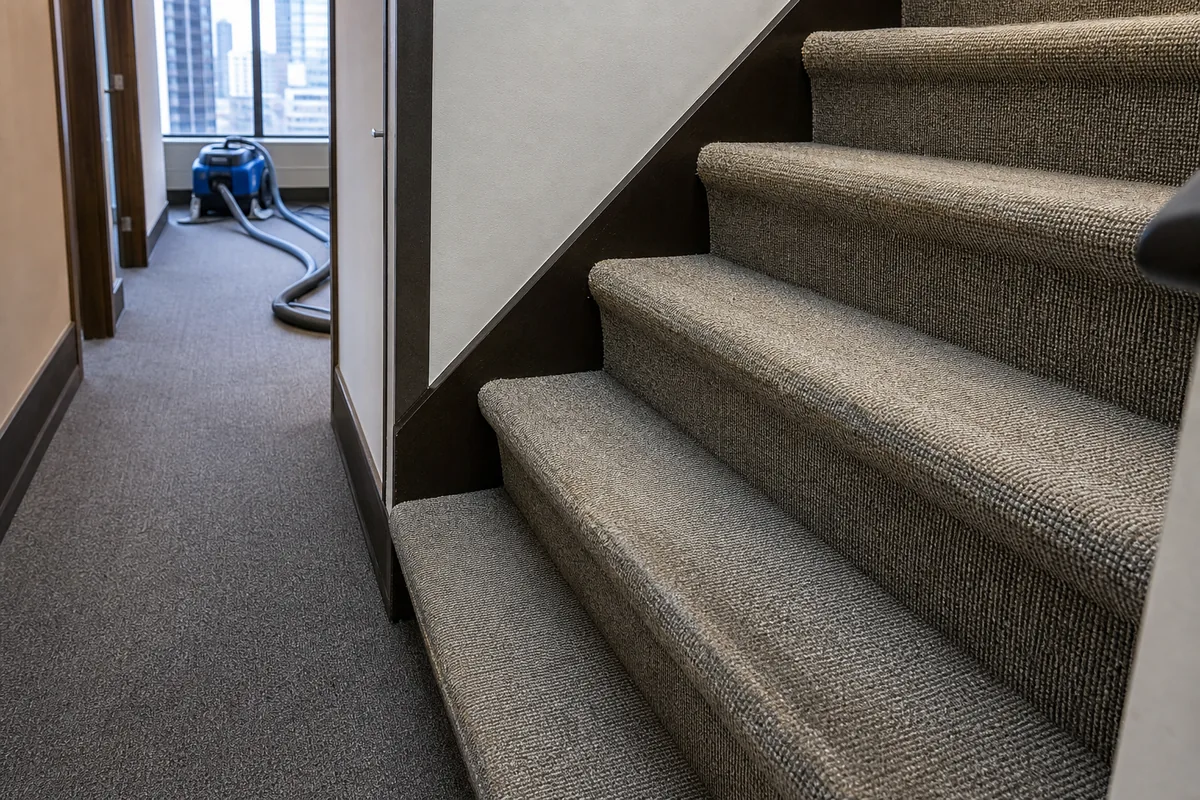
Treat Traffic Lanes Without Promising Wear Reversal
A dark hallway or stair center can brighten as soil is removed, yet heavily flexed fibers may remain dull or shaded. Abrasion changes the way pile reflects light, particularly on nosings and turns. We select pre-treatment, agitation, spot work, and extraction based on fiber, construction, condition, and response. Food, beverages, shoe products, and pet incidents receive separate assessment. Aggressive repeated treatment cannot restore fiber that has been worn away and may add risk. Explaining the difference between cleanliness and physical condition helps residents decide whether later repair, runner replacement, or full carpet replacement deserves consideration.
Keep an Alternate Household Route
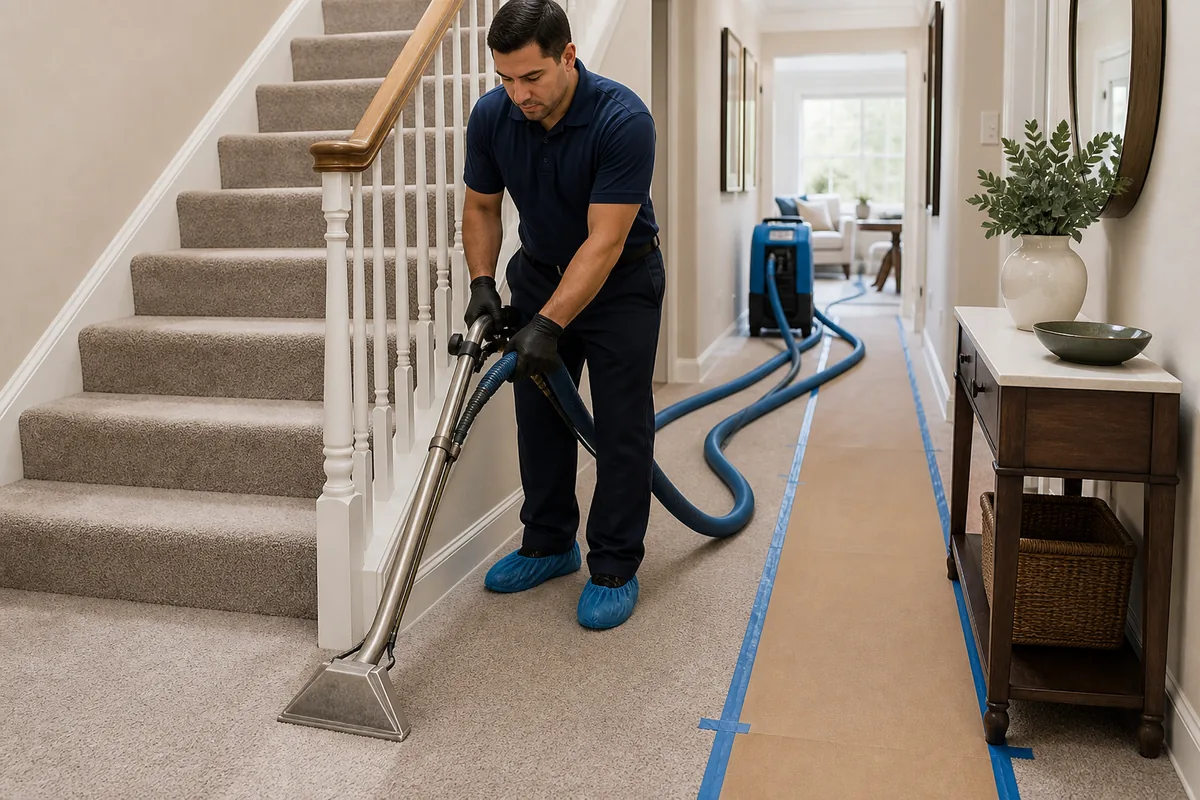
Stairs and hallways often provide the only route to bedrooms, bathrooms, or exits. Before cleaning, residents should identify necessary access, secure pets, and remove shoes, baskets, cords, and decor from landings. Work may be sequenced to preserve a route when the layout supports it, but not every staircase can remain in use. Hoses and equipment also need a planned position that does not create an unaddressed obstruction. In shared buildings, management rules and neighbor traffic may affect timing. A route plan should include drying, not only the period when the technician is actively working.
Manage Foot Traffic Through Drying
Carpeted stairs can dry differently at edges, turns, and detailed spot-treatment areas. Fiber, backing, humidity, temperature, ventilation, and treatment intensity all matter. Residents should follow guidance about access and footwear, keep pets away, and avoid replacing runners, baskets, or protective coverings while moisture remains. Fixed time promises are unreliable, particularly in closed stairwells with limited air movement. After drying, view the carpet from both directions because pile changes with light. Remaining dark or bright bands may reflect wear, texture, or permanent change rather than accessible soil. Check landings and wall edges separately, and keep the alternate route in place until the full flight is ready.
Questions before you schedule
Common questions
They can be included when carpeted and accessible, but the work should name treads, risers, landings, edges, and any areas limited by construction.
Recoverable soil may improve, while abrasion, crushed pile, dye change, and lost fiber continue to affect color and light reflection.
Access depends on layout, carpet condition, treatment, and observed drying. Plan an alternate route when possible and follow on-site guidance.
No. Loose installation, fraying, exposed fasteners, damaged seams, and worn transitions require flooring repair rather than a cleaning process. Those installation conditions should be recorded before wet work begins.
Ready for a quote?
Tell us what you need cleaned.
Call us or fill out the form. We will contact you to discuss the job, answer your questions, and provide a quote.
Get My Quote