Material-Specific Furniture Care
Leather Furniture Cleaning in Hammond
Looking for leather cleaning based on finish and condition in Hammond or Northwest Indiana? Tell us what you need cleaned. Call us or fill out the form, and we will contact you to discuss the job and provide a quote.
Serving Hammond and Northwest Indiana homes, apartments, condos, and workplaces.
Get a quote
Get a upholstery cleaning quote in Hammond
Choose a service and your city, then send your contact information. We will contact you to discuss the job and provide a quote.
Quote request received
Quick details
What to tell us
Tell us which rooms, furniture, rugs, or floors need service.
Point out spots, odors, heavy traffic, pet concerns, or past cleaning products.
Share your Northwest Indiana city, ZIP code, stairs, parking, and entry details.
Identify the Surface and Its Finish
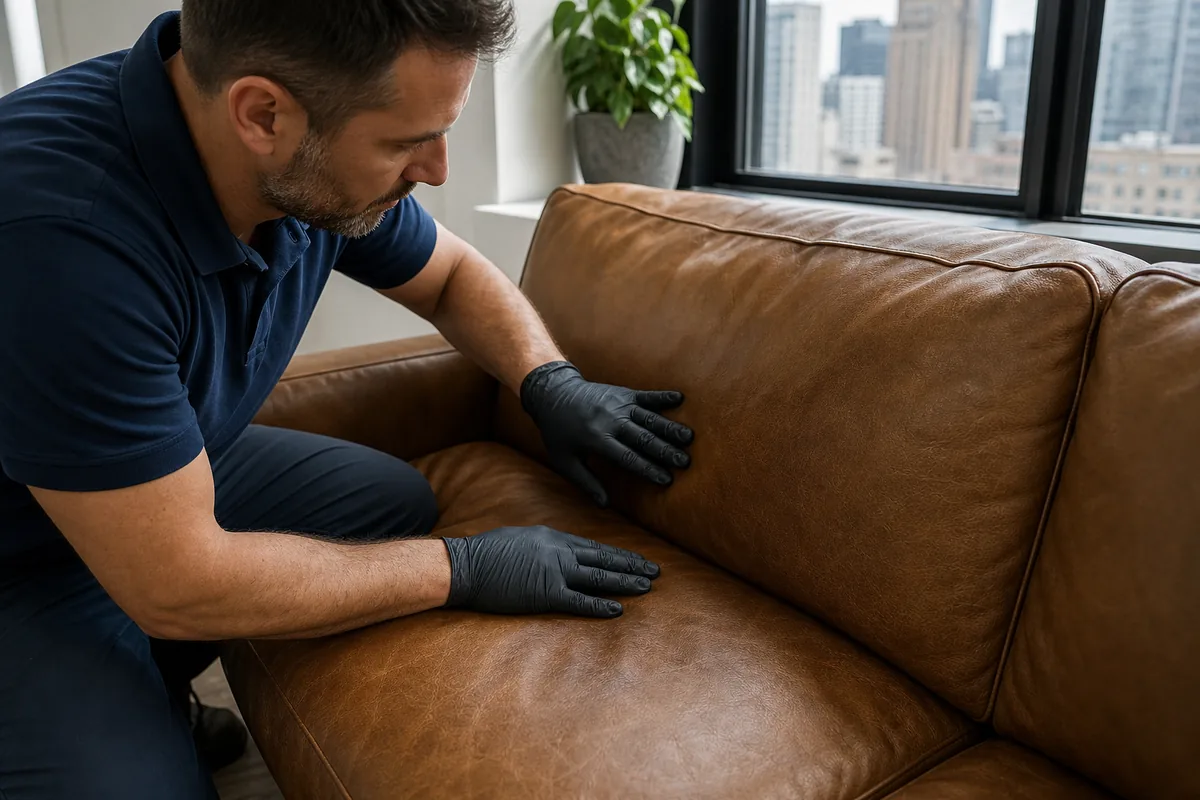
The word leather on a sales description does not always explain every panel of a sofa or chair. Labels, manufacturer records, and visual inspection help identify protected seating areas, absorbent aniline surfaces, suede-like materials, vinyl, and polyurethane-coated components. A discreet test evaluates how the finish responds before a visible panel is treated. We also note repairs, recoloring, and aftermarket coatings because they can change the outcome. When identification remains uncertain or testing suggests unstable color or finish, the work should be reduced or referred. Starting with the surface type prevents a generic upholstery process from being applied to a material that needs different handling.
Distinguish Soil From Finish Wear
Dark headrests and arms may hold body oils and grime, but pale edges, cracking, flaking, and exposed lighter areas often indicate finish loss or wear. Cleaning can reveal these permanent conditions more clearly once surface soil is removed. We compare protected and exposed areas and discuss where improvement is likely. Scratches, pet claw marks, stretched panels, and collapsed cushions are not cleaning problems. Coated synthetic panels that are peeling should not be described as dirty leather. Honest separation of soil from material failure avoids increasingly aggressive cleaning on a surface that actually needs repair, recoloring, panel replacement, or another furniture specialist.
Get a quote for this service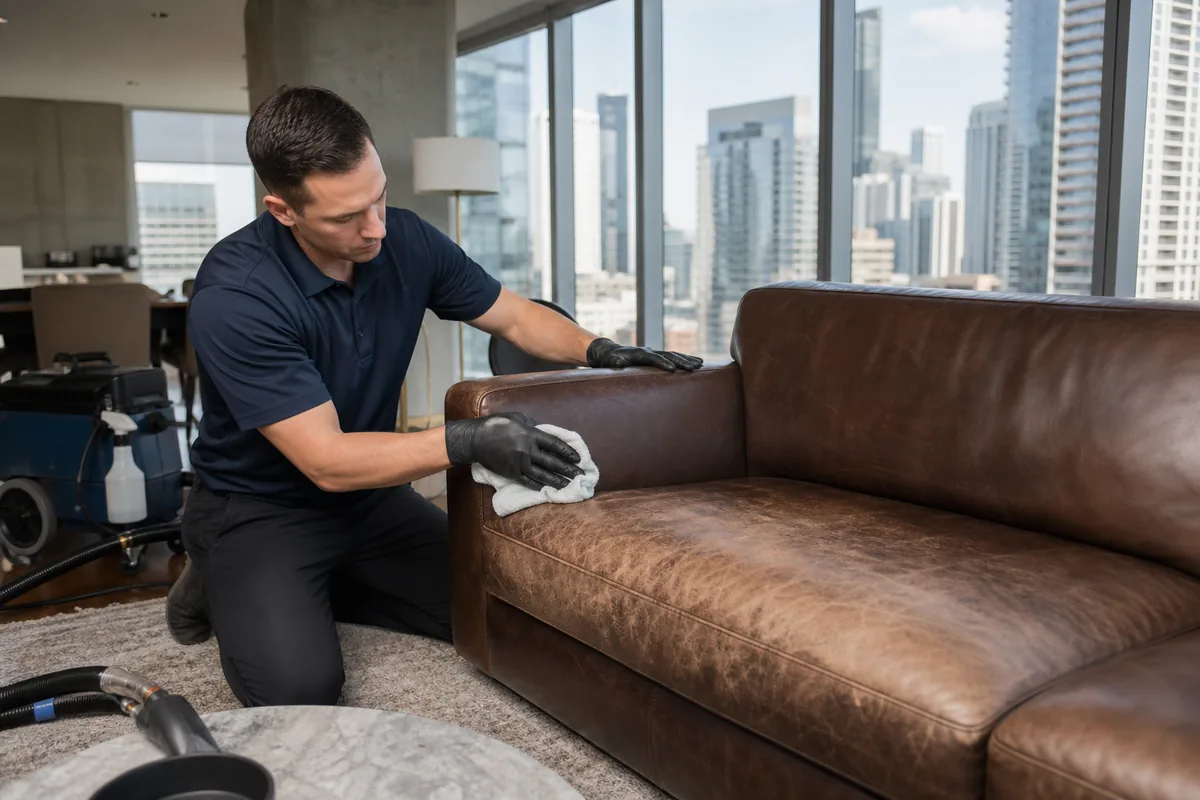
Remove Surface Soil in Controlled Stages
Loose dust and debris are removed from accessible seams, cushion gaps, and panels before a leather-appropriate product is tested. High-contact areas may need several controlled passes so loosened soil is collected rather than spread. Moisture is kept away from openings where it could move into fill or unfinished edges. Contrasting stitching, decorative trim, and adjacent wood are considered separately. Household oils, wipes, and multipurpose cleaners may leave films that attract soil or alter sheen. We do not layer products blindly over an unknown coating. The chosen process follows observed finish behavior and manufacturer information when it is available.
Use Precise Language About Conditioning
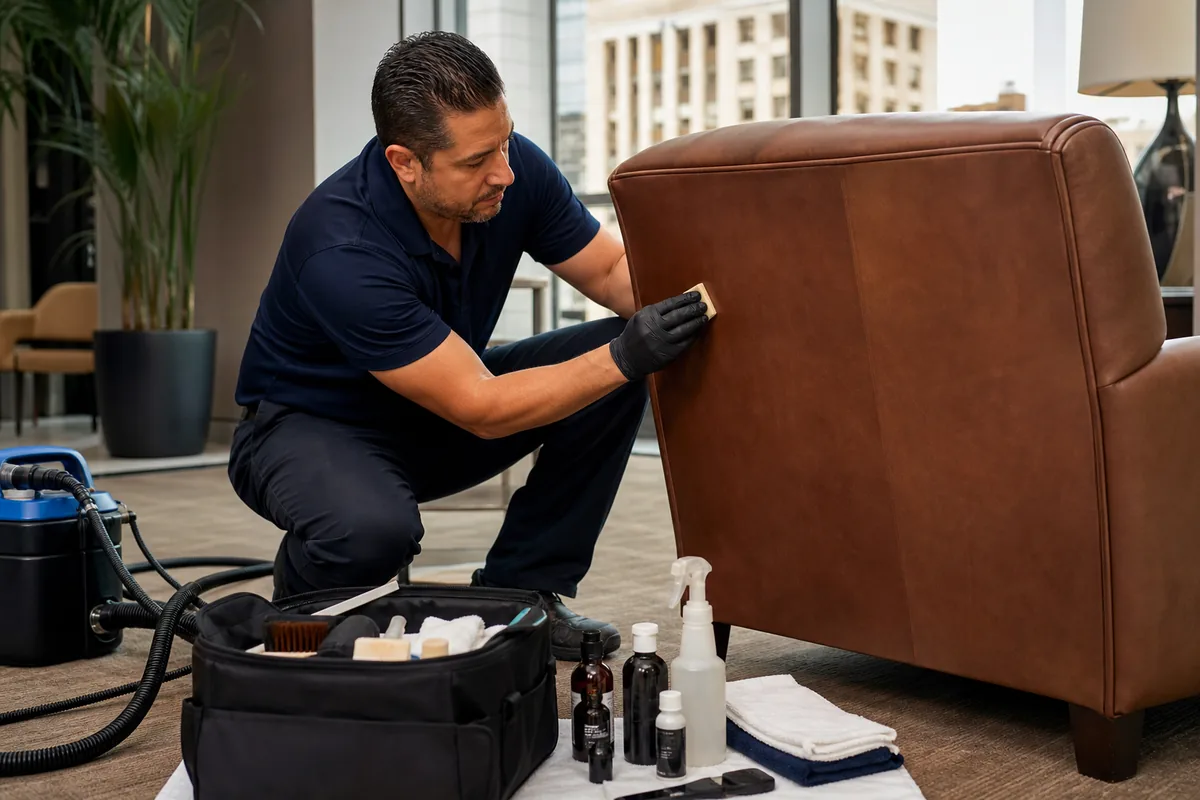
Conditioning is not a universal requirement or a way to repair damaged leather. Whether a compatible maintenance product is appropriate depends on the leather type, existing finish, manufacturer guidance, and condition. Applying oil or conditioner to a coated or unsuitable surface can create residue without reaching the leather beneath. No product can replace missing color, rebuild cracked finish, or reattach a peeling synthetic layer. We explain what product is being used and why, rather than promising that a chair will be restored by conditioning. Any change in sheen should be evaluated across the panel so the result does not appear patchy.
Maintain Leather Between Services
Routine care begins with gentle dry dust removal and prompt attention to spills according to manufacturer guidance. Avoid experimenting with household oils, alcohol, strong detergents, or abrasive sponges. Keep sharp objects and pet claws in mind, and recognize that sunlight and direct heat can contribute to material changes that cleaning cannot reverse. Throws can protect high-use areas but may also transfer dye, especially when damp. In a Hammond home with radiators or strong window exposure, furniture placement can influence wear patterns over time. Periodic inspection helps identify finish failure early and distinguishes a maintenance need from a repair or replacement decision.
Questions before you schedule
Common questions
No. Finish, absorbency, dyes, coatings, repairs, and mixed materials determine the process. Identification and discreet testing come before broad cleaning.
No. Cracks, missing finish, and peeling coated material are damage. Cleaning may remove surrounding soil but does not rebuild the surface.
No. Product suitability depends on leather type, finish, condition, and manufacturer guidance. An unsuitable conditioner can leave residue or change sheen.
Some surface transfer may improve, but absorbed dye or finish change can remain. Aggressive removal attempts may affect the original color, so testing is important.
Ready for a quote?
Tell us what you need cleaned.
Call us or fill out the form. We will contact you to discuss the job, answer your questions, and provide a quote.
Get My Quote