Care for Mixed-Fiber Fabrics
Synthetic-Blend Upholstery Cleaning in Hammond
Looking for cleaning upholstery made from mixed synthetic fibers in Hammond or Northwest Indiana? Tell us what you need cleaned. Call us or fill out the form, and we will contact you to discuss the job and provide a quote.
Serving Hammond and Northwest Indiana homes, apartments, condos, and workplaces.
Get a quote
Get a upholstery cleaning quote in Hammond
Choose a service and your city, then send your contact information. We will contact you to discuss the job and provide a quote.
Quote request received
Quick details
What to tell us
Tell us which rooms, furniture, rugs, or floors need service.
Point out spots, odors, heavy traffic, pet concerns, or past cleaning products.
Share your Northwest Indiana city, ZIP code, stairs, parking, and entry details.
Read Beyond the Word Synthetic
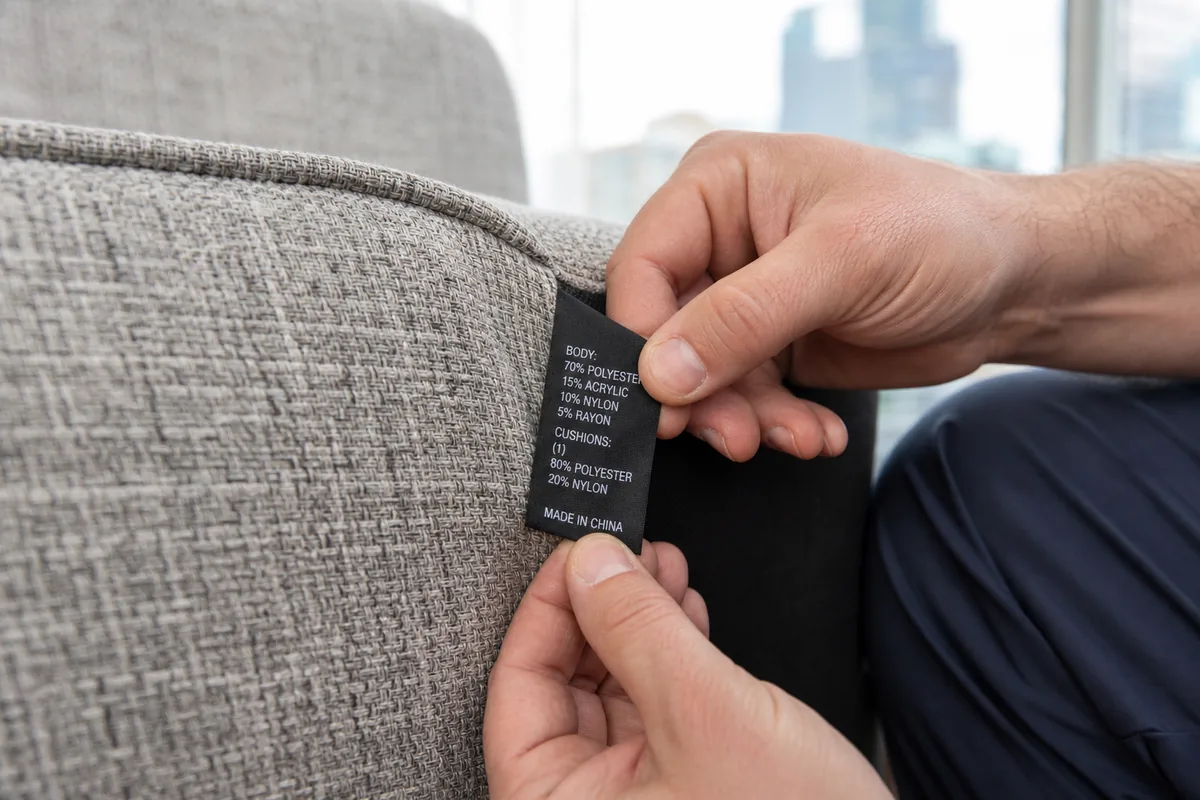
A fabric label may list several fibers by percentage, but performance also depends on yarn construction, weave, backing, finish, and dye method. Decorative piping or cushion sides may not match the main seating panel. We review manufacturer guidance when available and inspect the full piece for mixed materials. A discreet test helps assess color, texture, and residue response. Even common polyester blends should not be treated automatically, especially after unknown household products have been used. Understanding the component materials supports a process for the actual furniture and helps identify panels that require separate handling or should remain outside the cleaning job.
Target Oily Soil and Sticky Residue
Some synthetic fibers readily show body oils on headrests, arms, and favorite seats. Household sprays can add detergent or polymer residue that attracts new soil and creates a stiff or shiny patch. We begin with dry removal, identify high-contact areas, and apply measured treatment based on testing. Recovery and rinsing choices matter because adding more product without removing residue can worsen resoiling. Repeated controlled passes may be more appropriate than aggressive scrubbing. Cleaning can expose permanent shine from abrasion beneath the soil, so a panel that remains visually different does not always need stronger treatment. Its fibers may have been physically altered.
Get a quote for this service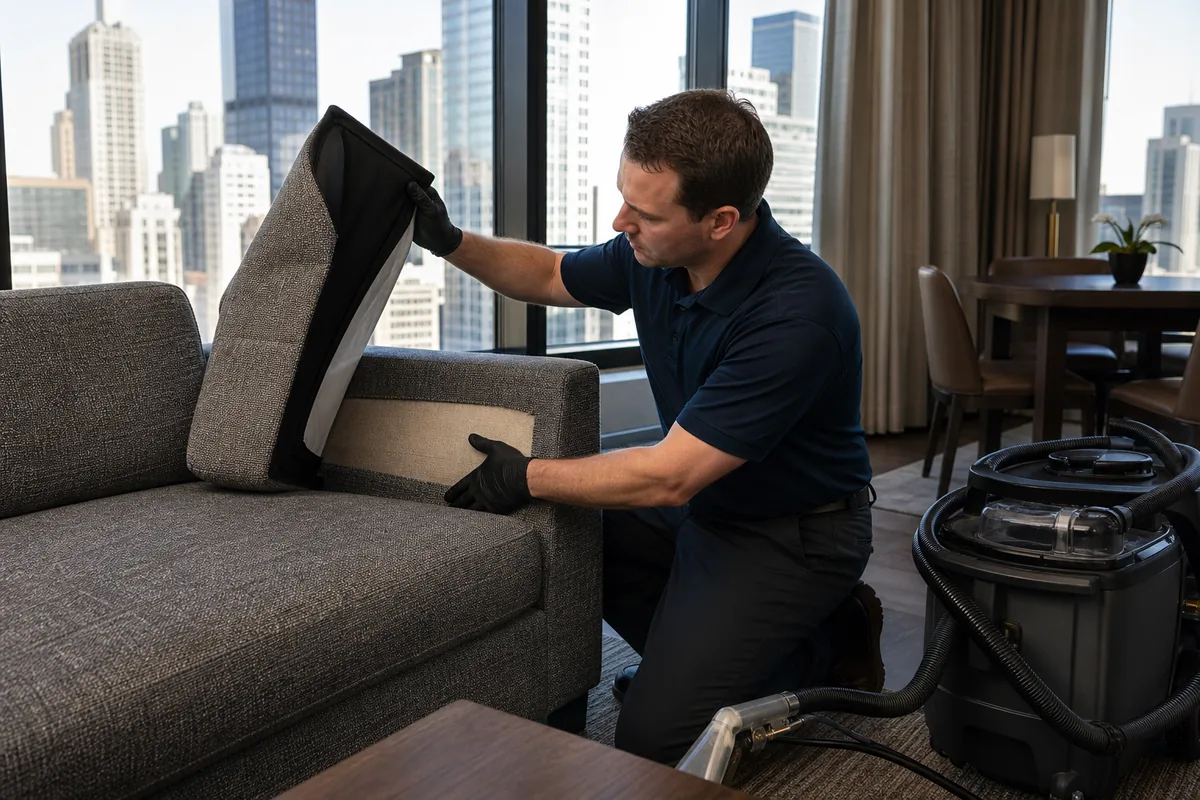
Distinguish Pilling, Fuzzing, and Wear From Dirt
Pills and fuzzy areas form when fibers and yarns experience friction. They can trap soil, but cleaning alone does not rebuild the original surface. Shiny seat edges, flattened texture, pulled loops, and heat damage are also physical conditions rather than stains. We compare protected panels and document wear before treatment so expectations remain tied to the material. Grooming may improve temporary direction changes, while permanent abrasion remains. Cutting or shaving pills is a separate alteration that should not be performed casually. The cleaning plan focuses on removable material without promising that a long-used panel will match an untouched back or cushion underside.
Treat Each Spill According to Its Chemistry and History
Beverages, food oils, ink, cosmetics, pet residue, and unknown marks do not respond to one universal spotter. The result also depends on time, heat, dye stability, and products previously applied. We ask for spill history when available and test before expanding treatment. Contrasting threads, prints, and transfer dyes from blankets or clothing receive additional attention. Some stains improve partially because the original material changed the color or surface. The surrounding panel is balanced so treatment does not leave a sharp clean boundary. Clear limits are preferable to repeated chemistry that introduces new residue or texture damage.
Plan Drying for Fabric, Backing, and Cushion Fill
Synthetic face fibers may feel dry before backing and cushion fill are ready. Foam density, batting, humidity, airflow, and treatment intensity all affect the process. Cushions are spaced rather than stacked, and fitted covers or throws stay off during drying. Directional fabrics may need final grooming. In a Northwest Indiana condo with sealed windows or limited cross-ventilation, interior airflow becomes especially important, but fixed drying promises still do not fit every room. Once fully dry, review the piece from several angles. If a spot remains, reassess whether it is soil, dye change, abrasion, or texture before considering additional treatment.
Questions before you schedule
Common questions
No. Fiber blend, backing, dyes, finishes, soil type, wear, and prior products all influence the process and result.
Cleaning can remove soil caught around pills, but pilling is a physical fiber condition. Fabric shaving or repair is separate from routine upholstery cleaning.
Remaining shine may be abrasion, flattened fibers, dye change, or residue. Comparing protected areas and testing helps distinguish these causes.
Yes. Rings can involve residues, backing, uneven moisture, dyes, or prior products. The word synthetic does not eliminate those variables.

Ready for a quote?
Tell us what you need cleaned.
Call us or fill out the form. We will contact you to discuss the job, answer your questions, and provide a quote.
Get My Quote