Fabric-Specific Upholstery Care
Microfiber Upholstery Cleaning in Hammond
Looking for careful cleaning for microfiber furniture in Hammond or Northwest Indiana? Tell us what you need cleaned. Call us or fill out the form, and we will contact you to discuss the job and provide a quote.
Serving Hammond and Northwest Indiana homes, apartments, condos, and workplaces.
Get a quote
Get a upholstery cleaning quote in Hammond
Choose a service and your city, then send your contact information. We will contact you to discuss the job and provide a quote.
Quote request received
Quick details
What to tell us
Tell us which rooms, furniture, rugs, or floors need service.
Point out spots, odors, heavy traffic, pet concerns, or past cleaning products.
Share your Northwest Indiana city, ZIP code, stairs, parking, and entry details.
Microfiber Is a Category, Not One Cleaning Rule
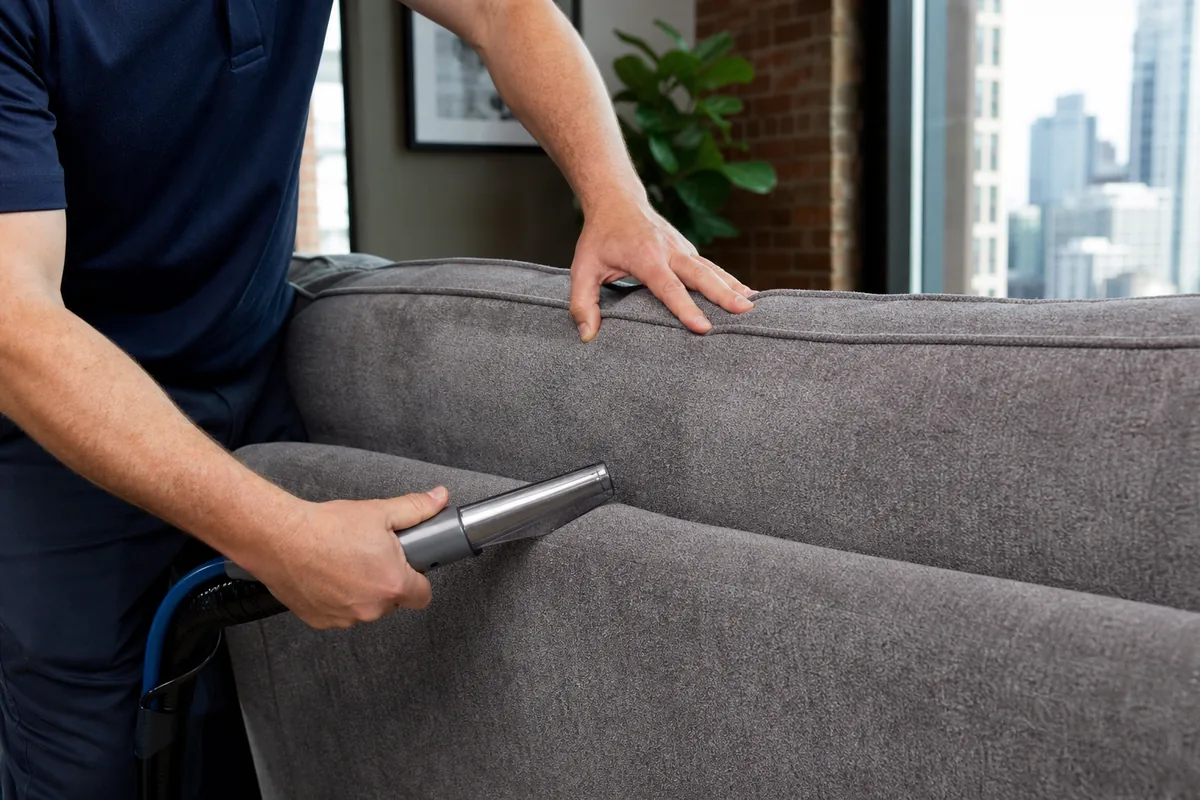
The term describes very fine manufactured fibers, not a single finished fabric. Two microfiber sofas can have different blends, backing, dye systems, and care codes. One may tolerate a water-based process while another calls for a different approach. We review the manufacturer's label when available and inspect hidden areas, seams, and cushion undersides for clues about construction. Marketing descriptions from the original sale can help, but the current condition still matters. Furniture that has been spot cleaned repeatedly may respond differently from an untouched piece. The process is selected for the actual upholstery rather than a general assumption that all microfiber behaves alike.
Understand Rings, Shading, and Texture Direction
A visible circle after spot cleaning may be residue, a moisture boundary, a change in texture direction, dye movement, or a combination. Microfiber can reflect light differently when the nap is brushed one way, making a clean area appear discolored from one angle. We view the panel from several directions and compare it with protected fabric. Testing helps determine whether controlled cleaning and grooming may improve the appearance. Aggressive rubbing can flatten or distort the surface, so more friction is not automatically better. Permanent abrasion or color loss may remain even after removable residue has been addressed.
Get a quote for this service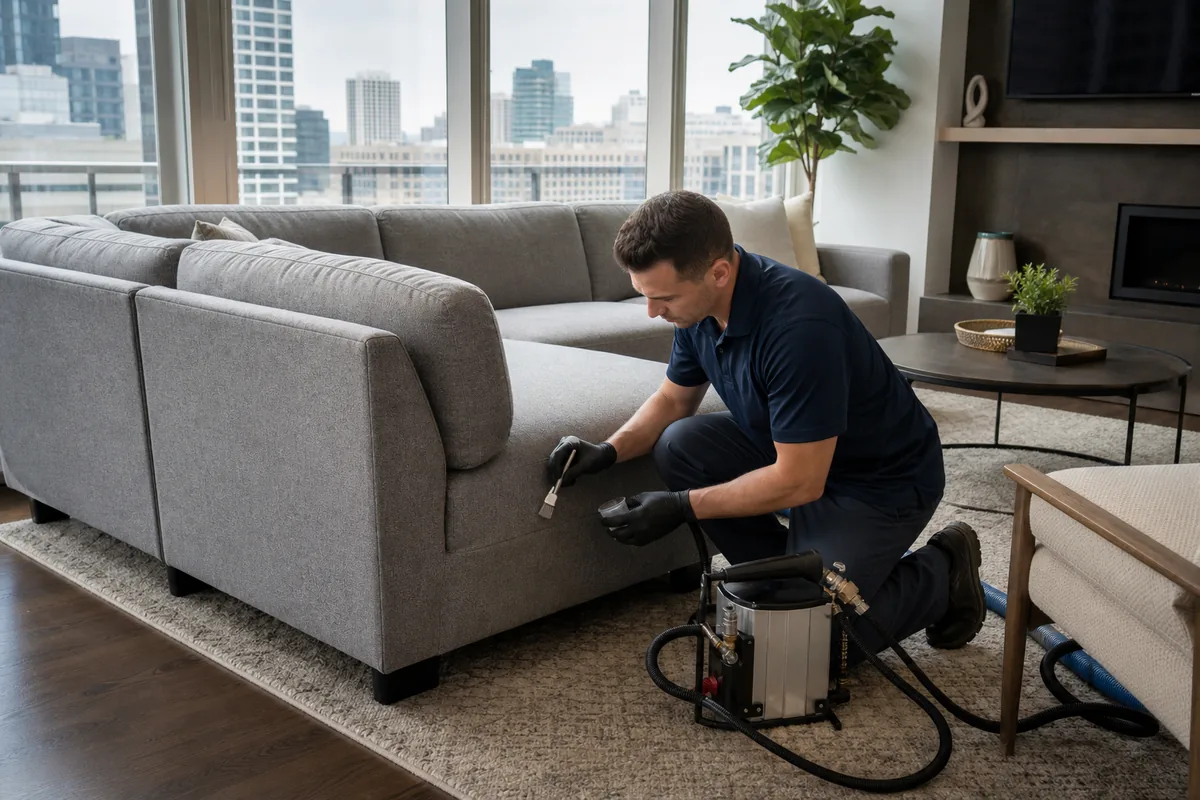
Treat High-Contact Body-Oil Buildup Gradually
Headrests, arm fronts, and favorite seats often need more attention than decorative backs. Body oils can bind with ordinary soil and residues from hair or skin products. A gradual process uses dry removal, suitable preconditioning, controlled agitation when supported by the fabric, and measured recovery. Repeated light passes may be preferable to saturating one panel. We watch seams and cushion edges where moisture can move into padding or backing. Cleaning may reveal shiny wear beneath the buildup, particularly on a long-used arm. That remaining difference should not be mistaken for soil that simply requires stronger chemistry or harder scrubbing.
Handle Spots Without Creating a Cleaner-Looking Island
Food, beverages, pet residue, and unknown marks should be evaluated separately before the surrounding panel is balanced. Treating only the center can leave a sharp boundary between the worked area and adjacent fabric. We consider the spill history, household products already used, and whether the stain changed the dye. A discreet test precedes broad treatment. Some spots improve only partially because of age, heat, chemical reaction, or fiber damage. The objective is an even result consistent with the fabric's condition, not an isolated bright patch or a claim that every stain can be removed from microfiber.
Groom and Dry the Fabric Evenly
Microfiber often benefits from directional grooming after cleaning so the surface lies consistently. Cushions should be positioned with space around them and not stacked while damp. Drying varies with backing, padding, humidity, ventilation, and how much treatment high-contact areas required. Covers and throws should remain off until the upholstery is ready. Once dry, the nap can be reviewed from multiple angles in normal room light. Slight directional shading may be inherent to the fabric. If a ring or texture change persists, additional treatment should be considered only after the piece is fully dry and the underlying cause is reassessed.
Questions before you schedule
Common questions
No. The care code, backing, blend, dyes, and manufacturer guidance determine the approach. Microfiber should be inspected and tested rather than treated by name alone.
Its fine surface can reflect light differently as the nap changes direction. Directional shading is not always a stain or evidence that color has been removed.
Some rings improve when residue and the surrounding panel are treated evenly. Dye change, backing marks, or abrasion may limit the result.
Only when the manufacturer specifically allows it. A zipper alone does not mean the cover can be washed without shrinkage, color, or fit concerns.

Ready for a quote?
Tell us what you need cleaned.
Call us or fill out the form. We will contact you to discuss the job, answer your questions, and provide a quote.
Get My Quote