Small Furniture, Concentrated Use
Ottoman and Upholstered Bench Cleaning in Hammond
Looking for cleaning ottomans, benches, and multipurpose seating in Hammond or Northwest Indiana? Tell us what you need cleaned. Call us or fill out the form, and we will contact you to discuss the job and provide a quote.
Serving Hammond and Northwest Indiana homes, apartments, condos, and workplaces.
Get a quote
Get a upholstery cleaning quote in Hammond
Choose a service and your city, then send your contact information. We will contact you to discuss the job and provide a quote.
Quote request received
Quick details
What to tell us
Tell us which rooms, furniture, rugs, or floors need service.
Point out spots, odors, heavy traffic, pet concerns, or past cleaning products.
Share your Northwest Indiana city, ZIP code, stairs, parking, and entry details.
Identify How the Piece Is Actually Used
An entry bench exposed to wet coats and winter boots has a different soil pattern from a bedroom bench or an ottoman used by a dog. We ask where the piece normally sits, what contacts the top, and whether trays, blankets, shoes, or pets regularly cover it. The underside and protected edges provide comparison areas for color and texture. In Northwest Indiana homes with limited space, an ottoman may switch roles several times each day, so the inspection follows that real use rather than its furniture label. Understanding the pattern helps target treatment and distinguish removable buildup from abrasion caused by repeated feet, trays, or seating.
Inspect Tufting, Seams, Hinges, and Storage Areas
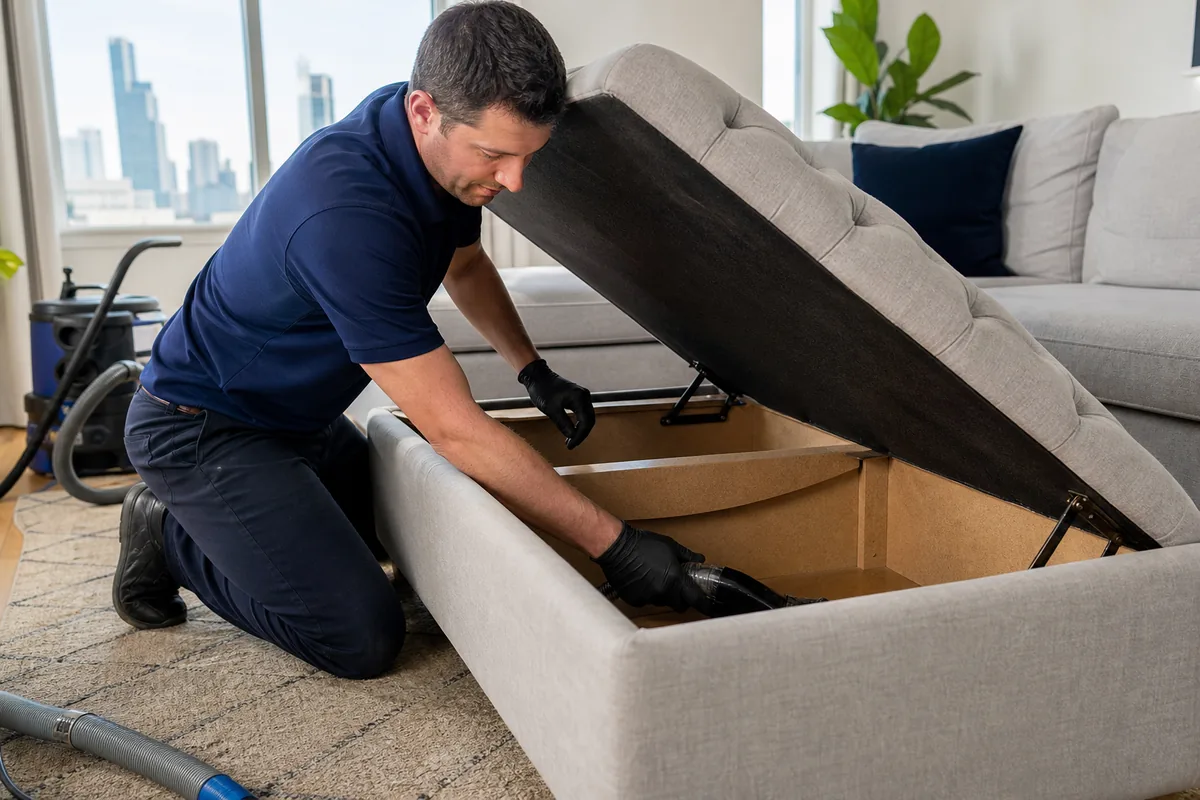
Buttons and deep tufts collect crumbs and hair, while hinged lids place stress on edge seams. Storage ottomans may also contain fabric liners, unfinished wood, metal hardware, or items that must be removed before work. We check for loose buttons, pulled threads, unstable hinges, exposed staples, and weak stitching so cleaning does not treat structural damage as a soil problem. The interior is included only when its material and the agreed work support cleaning; ordinary exterior service does not imply the cabinet is dismantled. A measured setup protects decorative details and keeps moisture controlled around hardware and absorbent internal materials.
Get a quote for this service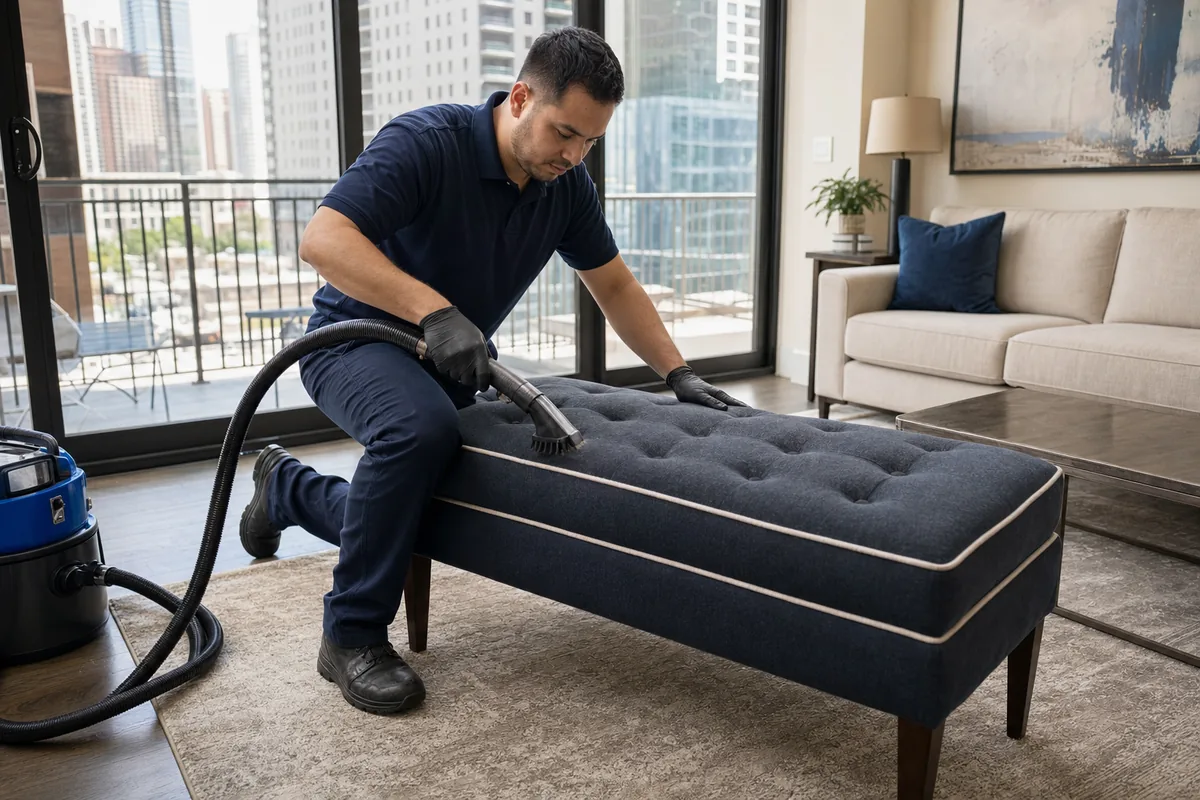
Remove Dry Debris From Folds and Edges
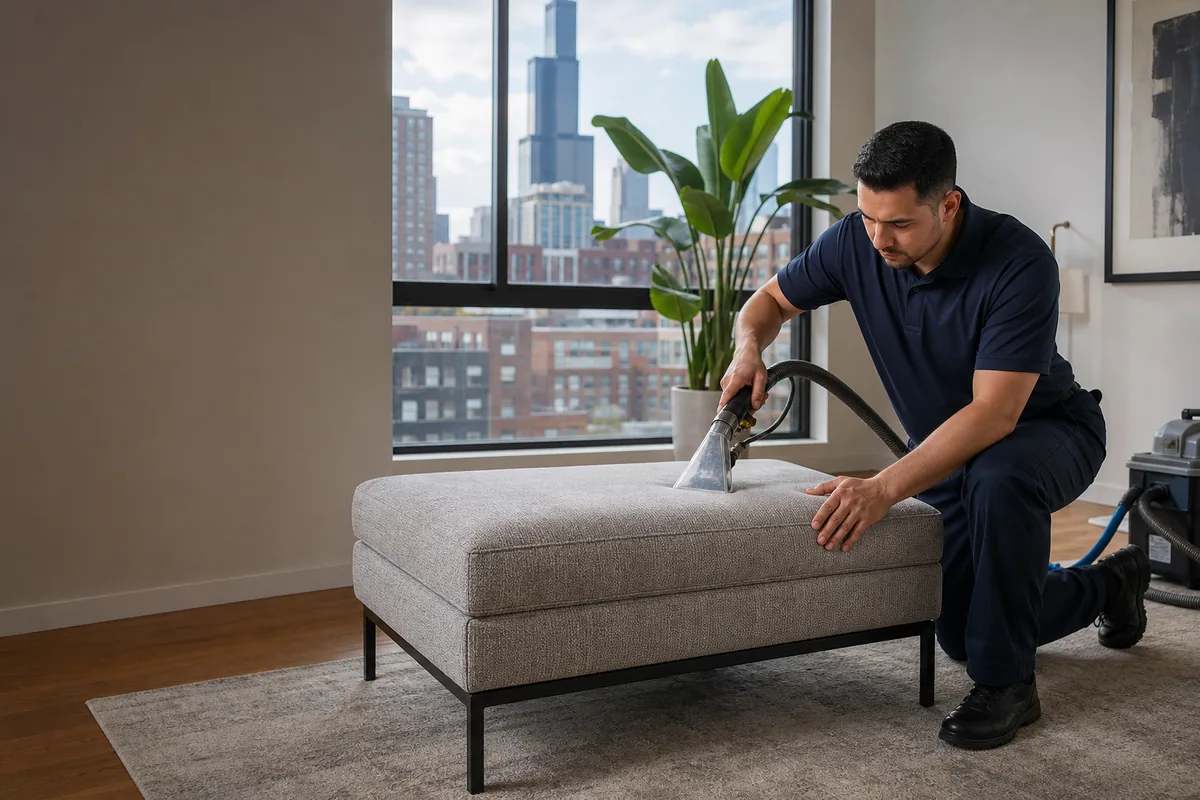
Dry removal is especially important on tufted tops, welted seams, skirt folds, and the narrow gap around a storage lid. Crumbs and pet hair should be collected before moisture turns them into residue. Tools are selected to reach accessible recesses without pulling buttons or fraying piping. Hair embedded in damaged weave may not release completely. Once loose material is reduced, the cleaner can assess spots and overall soil more accurately. This prevents the common mistake of applying more solution to a small piece simply because hidden debris keeps emerging from its folds during treatment.
Match Spot Treatment to Fabric and Prior Products
Shoe marks, beverage rings, pet residue, and body-oil darkening require different judgments. We review the care code and manufacturer guidance when available, test discreetly, and consider whether household sprays have already changed the surface. A storage bench may combine several textiles, while a decorative ottoman may have contrasting buttons or trim that respond differently. Treatment is adjusted by component rather than applied indiscriminately. Some discoloration can remain because of fading, dye transfer, fiber damage, or repeated abrasion. The goal is a balanced improvement across reachable upholstery without promising that every mark is removable.
Allow Airflow Around the Top, Sides, and Base
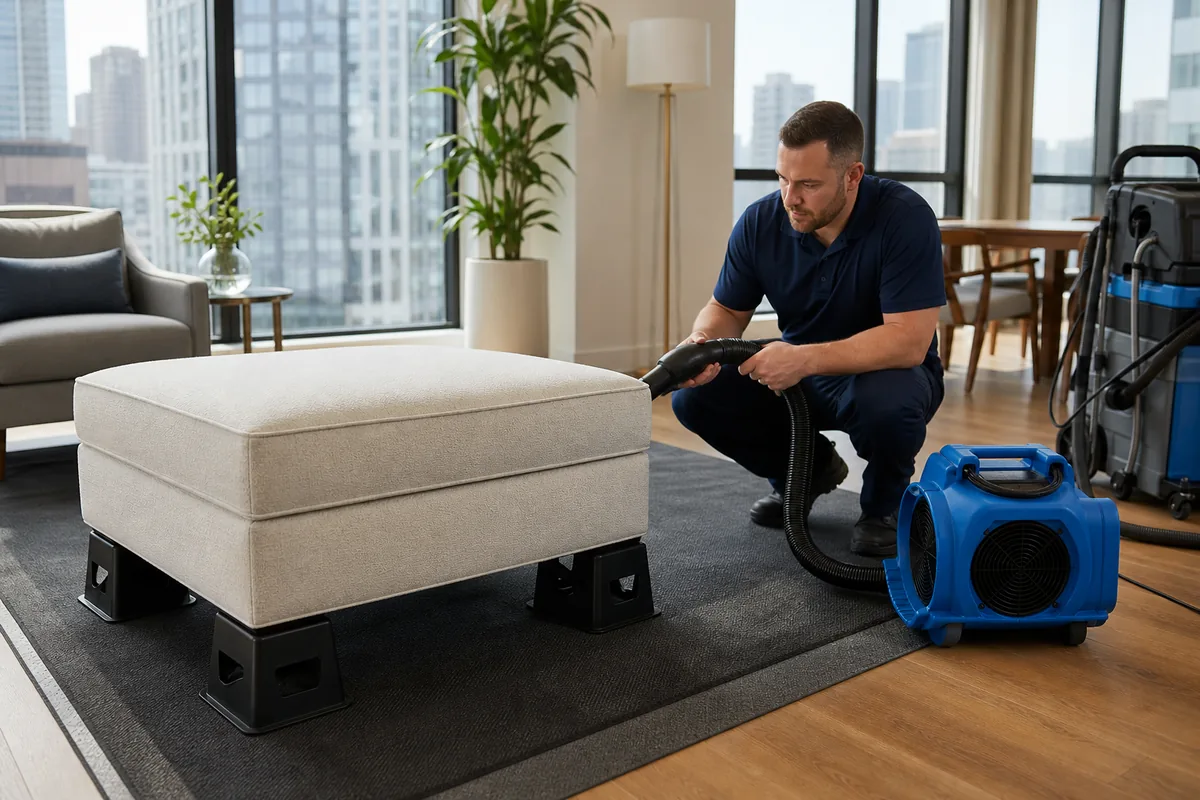
Thick padding, tufting, and layered lids can hold moisture longer than a flat surface suggests. The piece should be positioned so air can reach cleaned panels without resting damp fabric against carpet, wood flooring, or nearby furniture. Lids and hinges are placed only in stable positions appropriate to their design. Blankets, trays, fitted covers, and stored contents should not return until the upholstery is ready. Drying varies with fabric, fill, room conditions, and treatment. Once dry, gentle vacuuming or grooming may help restore an even surface, while remaining flatness or shine may reflect wear rather than retained soil.
Questions before you schedule
Common questions
It depends on the liner, construction, contents, and agreed work. Interior materials may require a different approach and ordinary exterior cleaning does not include dismantling hardware.
Cleaning can remove soil around tufts, but compressed fill, stretched fabric, and permanent distortion are structural or wear conditions that may remain.
The piece can be positioned with suitable floor protection and airflow. It should not sit with damp upholstery or unprotected furniture finish against the flooring.
Only when inspection identifies an odor source and suitable treatment. Hair, surface soil, body oils, and urine below the fabric are separate conditions.
Ready for a quote?
Tell us what you need cleaned.
Call us or fill out the form. We will contact you to discuss the job, answer your questions, and provide a quote.
Get My Quote