Care for Directional Pile Fabrics
Velvet Upholstery Cleaning in Hammond
Looking for inspection-led care for velvet furniture in Hammond or Northwest Indiana? Tell us what you need cleaned. Call us or fill out the form, and we will contact you to discuss the job and provide a quote.
Serving Hammond and Northwest Indiana homes, apartments, condos, and workplaces.

Get a quote
Get a upholstery cleaning quote in Hammond
Choose a service and your city, then send your contact information. We will contact you to discuss the job and provide a quote.
Quote request received
Quick details
What to tell us
Tell us which rooms, furniture, rugs, or floors need service.
Point out spots, odors, heavy traffic, pet concerns, or past cleaning products.
Share your Northwest Indiana city, ZIP code, stairs, parking, and entry details.
Identify the Velvet Before Treating It
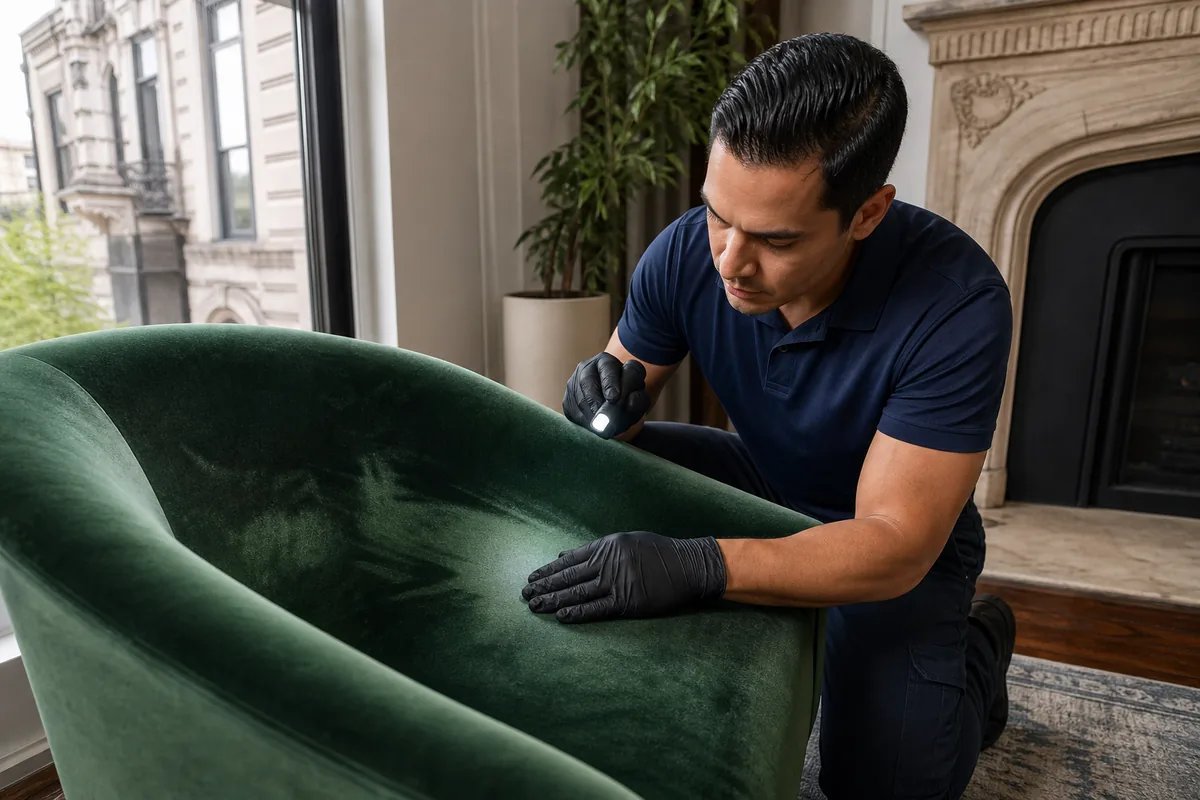
Visual appearance alone cannot establish fiber content. Manufacturer labels, purchase records, and care information are useful when available, but the current piece still requires inspection. We examine pile density, backing, trim, seams, cushion construction, and protected areas. A limited test helps assess color response, texture, and whether moisture changes the pile. Some delicate, antique, or unstable pieces may require a specialist process or a more limited work. This initial restraint is important because an unsuitable test in a visible area can create a larger problem than the original soil. Velvet care starts with identification and evidence, not a universal recipe.
Separate Directional Shading From Soil
Velvet changes tone as its pile points toward or away from the light. Handprints and seat marks may look dark from one side and pale from another without containing significant soil. We view each panel in multiple directions and gently assess whether the pile can be realigned. True staining, body-oil buildup, fading, and abrasion can exist alongside normal shading. Cleaning should target recoverable material without overworking a harmless directional effect. Before-and-after observations need consistent lighting and pile direction; otherwise the same clean panel can appear dramatically different between photographs. This distinction supports honest expectations and protects the fabric from unnecessary agitation.
Get a quote for this service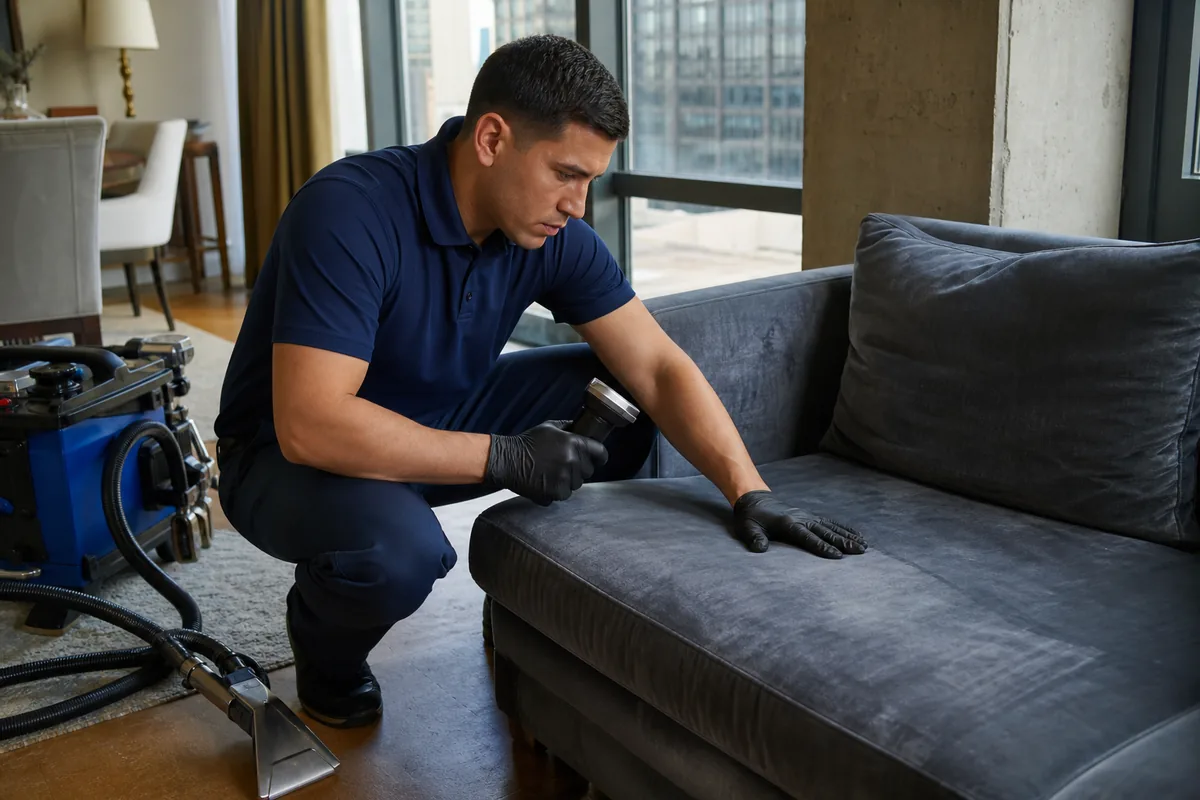
Control Moisture Around Pile, Backing, and Trim
Velvet may respond to moisture with texture change, rings, dye movement, or slow drying, depending on its fiber and construction. Treatment is applied and recovered in a controlled manner consistent with testing. Tufting, piping, wood frames, decorative nails, and contrasting trim are assessed separately because they can introduce additional materials. Heavy saturation is not a shortcut for deep soil. Cushion fill and backing can retain moisture even when the pile surface begins to feel dry. The technician monitors each panel and adjusts rather than forcing the entire piece through one sequence. If testing reveals unacceptable change, cleaning limits should be discussed before proceeding.
Use Gentle Grooming to Support an Even Finish
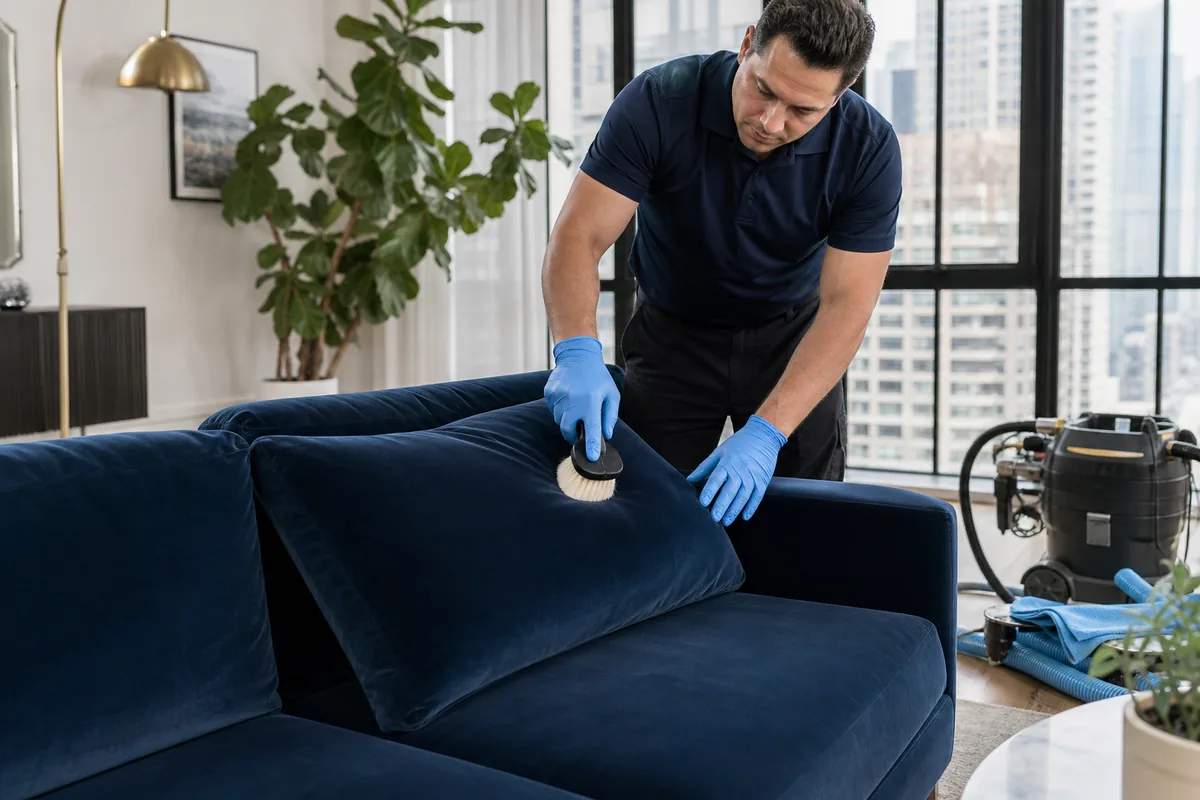
Pile direction should be managed during and after treatment. Suitable grooming can align fibers and reduce inconsistent shading caused by the cleaning process, but it cannot restore pile crushed by years of pressure or abrasion. Brushes and towels must suit the specific velvet; aggressive rubbing can distort the surface. Cushions are positioned without pressing damp pile against other fabric. On fixed arms and backs, the final direction is established panel by panel. Once fully dry, the furniture is viewed again under normal room lighting. Some natural shading will remain and is part of velvet's character rather than a flaw requiring additional treatment.
Protect Velvet From Everyday Pressure and Spills
After drying, avoid immediately replacing tight covers or stacking cushions. Rotate removable cushions when the furniture design permits, and blot new spills without grinding them into the pile. Household spot products can create rings or texture changes, so the care label should guide any response. Direct sunlight, radiator proximity, repeated pet resting, and the pressure of trays or heavy objects can produce changes cleaning will not reverse. A maintenance plan focuses on gentle dry removal and prompt, restrained response rather than frequent aggressive spotting. In compact Hammond rooms, small furniture-position changes may also reduce repeated pressure on one favorite seat or arm.
Questions before you schedule
Common questions
No. Velvet may be made from several fibers and blends, with different backing and dye behavior. Identification, care guidance, and testing determine the appropriate process.
Grooming may improve temporary pile distortion, but permanent crushing, abrasion, and pressure marks can remain even after soil is removed.
The pile reflects light differently when its direction changes. This normal shading should be distinguished from staining, fading, or dye loss.
Possibly, but age, fiber, dyes, backing, repairs, and trim may call for limited testing or specialist handling before any broad treatment.
Ready for a quote?
Tell us what you need cleaned.
Call us or fill out the form. We will contact you to discuss the job, answer your questions, and provide a quote.
Get My Quote