Natural-Fiber Upholstery Care
Cotton and Linen Upholstery Cleaning in Hammond
Looking for measured cleaning for cotton and linen upholstery in Hammond or Northwest Indiana? Tell us what you need cleaned. Call us or fill out the form, and we will contact you to discuss the job and provide a quote.
Serving Hammond and Northwest Indiana homes, apartments, condos, and workplaces.
Get a quote
Get a upholstery cleaning quote in Hammond
Choose a service and your city, then send your contact information. We will contact you to discuss the job and provide a quote.
Quote request received
Quick details
What to tell us
Tell us which rooms, furniture, rugs, or floors need service.
Point out spots, odors, heavy traffic, pet concerns, or past cleaning products.
Share your Northwest Indiana city, ZIP code, stairs, parking, and entry details.
Confirm Fiber Content and Construction
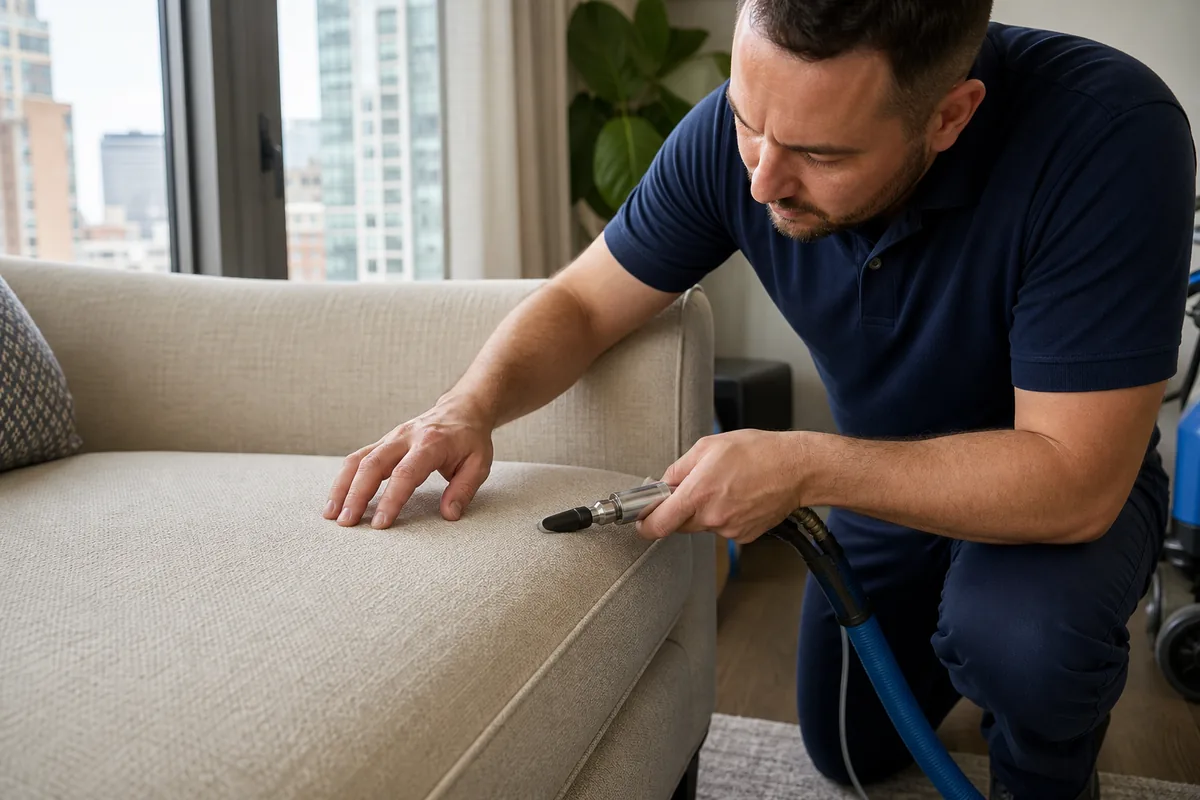
Appearance is not enough to distinguish pure linen, cotton, rayon, polyester, or a blend. Manufacturer labels and purchase information help, but seams, backing, cushion fill, trim, and prior repairs also affect the plan. We inspect for loosely woven areas, slubs, weakened threads, faded panels, and old water rings. A limited test evaluates color and texture response before a full cushion or panel is treated. If fiber content is uncertain, the cleaner should proceed conservatively rather than assume a natural-fiber method. This preparation establishes whether broad cleaning, low-moisture work, spot-only treatment, or specialist referral is the more responsible direction.
Account for Browning, Rings, and Dye Movement
Natural-cellulose fabrics can develop visible boundaries or discoloration when moisture, residues, backing materials, and slow drying interact. That does not mean every cotton or linen piece will brown, but it makes moisture control and complete recovery important. Existing rings may have been created by a spill, household spotting, or material beneath the face fabric. We test both the mark and surrounding panel, because treating only the center can create uneven appearance. Color movement in piping or contrasting threads is another concern. If testing reveals instability, the work and likely result should be discussed before a larger visible area is attempted.
Get a quote for this service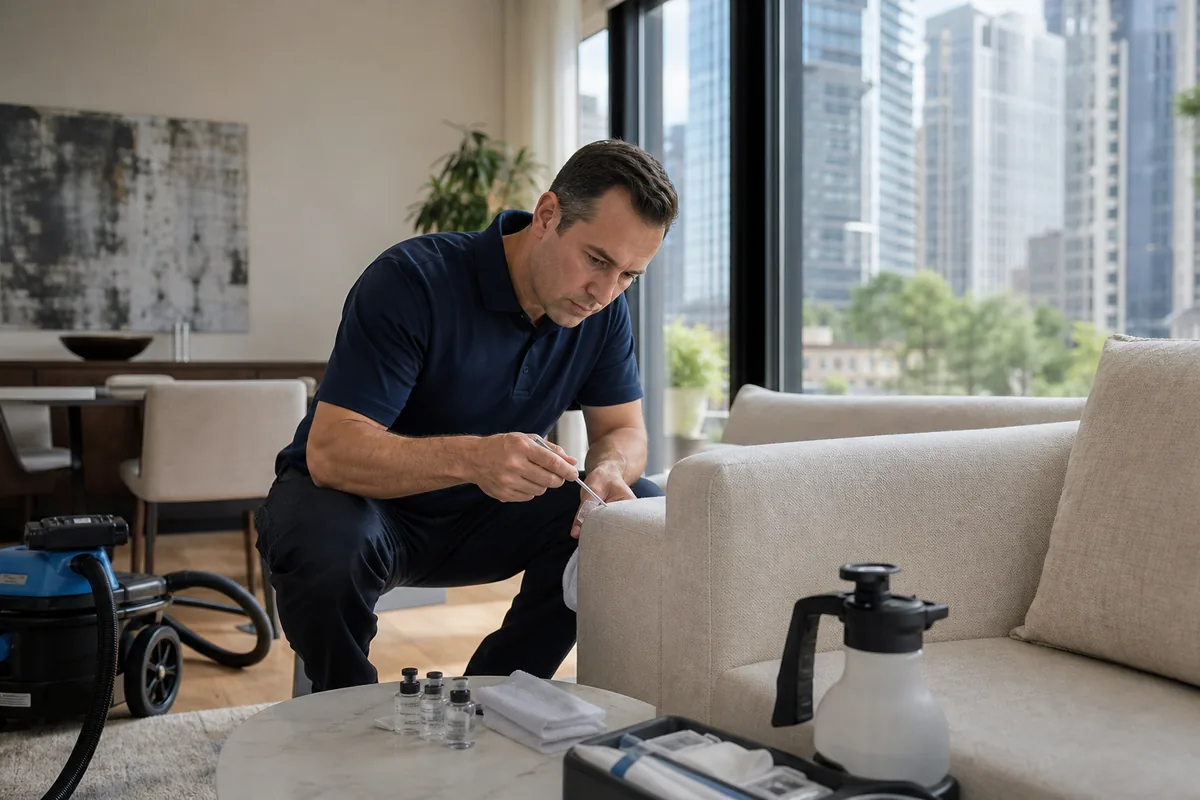
Treat Spots Without Overworking the Weave
Food, beverages, body oils, and pet marks require different treatment choices. Natural fibers can hold discoloration, while repeated rubbing can fuzz or distort the weave. We begin with dry removal and use measured applications suited to testing and care guidance. Older household products may complicate the response or leave a residue boundary. A stain can improve without disappearing, particularly when it has changed the dye or fiber. Decorative texture and natural slubs should not be mistaken for damage. The objective is balanced cleaning that respects the fabric's construction rather than forceful agitation intended to chase every remaining shadow.
Keep Cushion Covers in Their Intended Form
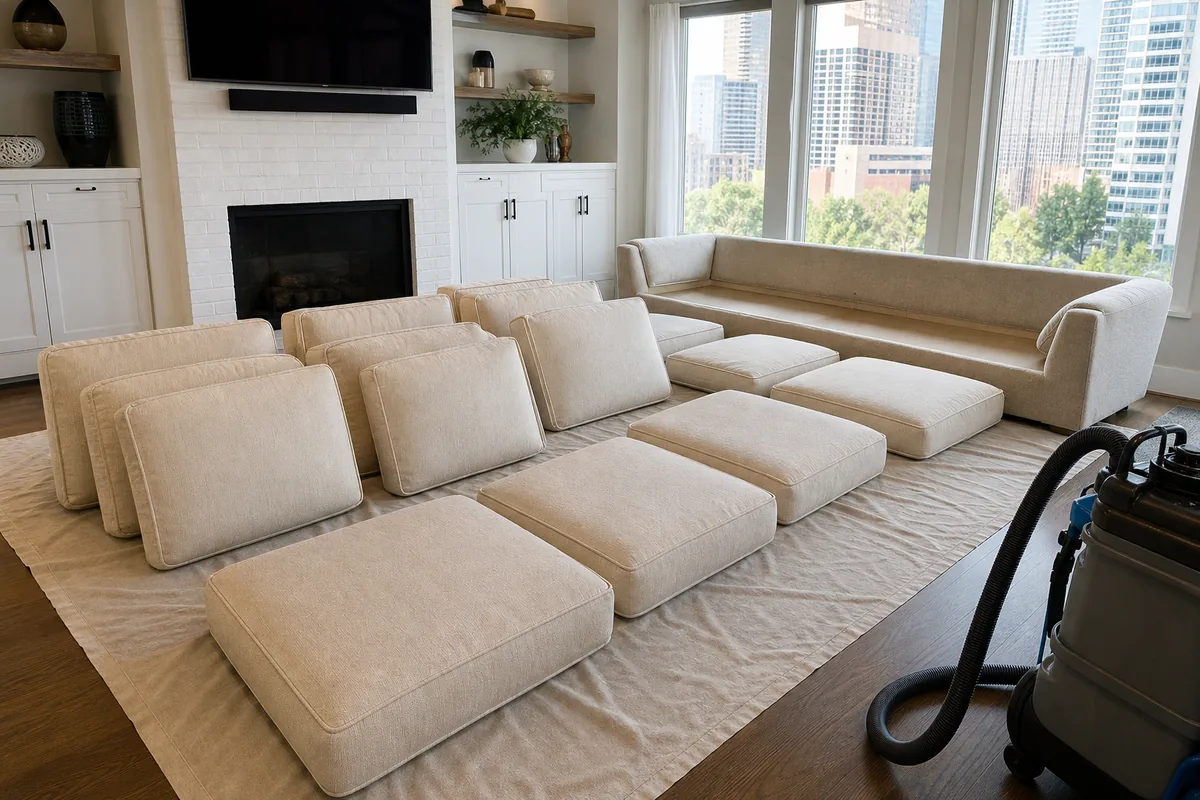
A zipper does not prove that a cushion cover is machine washable. Many covers are installed through zippers during manufacturing but can shrink, distort, or become difficult to refit after laundering. We follow the care label and generally evaluate the cover on its cushion unless the manufacturer directs otherwise. Seams, piping, and contrasting panels are checked for tension and color response. Cushion inserts also influence moisture and drying. Down, foam, and layered batting behave differently, and over-wetting the fill can extend drying. Keeping the component assembled as intended often allows more controlled treatment and a more reliable fit afterward.
Support Even Drying and Final Texture
Cotton and linen upholstery should dry with space around cushions and airflow reaching treated surfaces. The actual pace depends on weave, backing, fill, humidity, ventilation, and treatment intensity. Tight covers, throws, and stacked cushions can slow the process and leave pressure marks. Once dry, gentle grooming or vacuuming may even the surface if appropriate for the fabric. Review the piece in consistent light; woven texture can create natural variation. Persistent rings or discoloration should be reassessed only after full drying. Additional moisture is not automatically the solution, particularly when the underlying cause may be dye change, backing migration, or previous damage.
Questions before you schedule
Common questions
Some can, while other constructions need limited moisture or another method. Labels, backing, dyes, trim, condition, and testing guide the decision.
The boundary may involve residue, moisture movement, backing material, or dye change. Treating the surrounding panel may help, but complete correction is not assured.
Only if manufacturer instructions allow it. Zippers are often for assembly, and home washing can affect size, color, texture, and fit.
Cleaning is not upholstery tailoring. Some temporary texture may settle during drying, while inherent wrinkles, stretched fabric, and construction-related variation can remain.
Ready for a quote?
Tell us what you need cleaned.
Call us or fill out the form. We will contact you to discuss the job, answer your questions, and provide a quote.
Get My Quote